
Faculty spotlight
@georgiancollege faculty are awesome! In this faculty spotlight series from the Centre for Teaching and Learning (CTL), we will shine a light on the creativity and innovative practices of our peers. Our vision is to “inspire excellence by igniting curiosity, connecting communities and supporting bravery at the leading edge of teaching and learning.”
On this page:
Meet our faculty




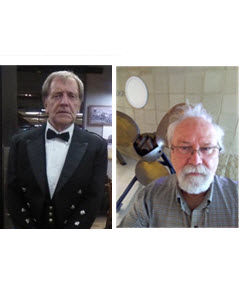
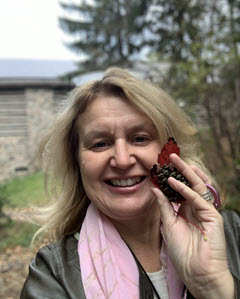
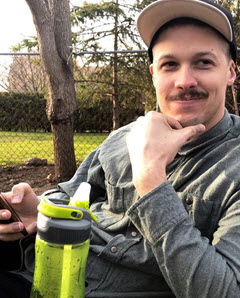


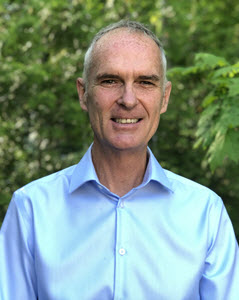
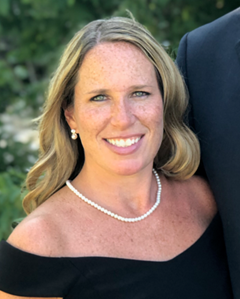
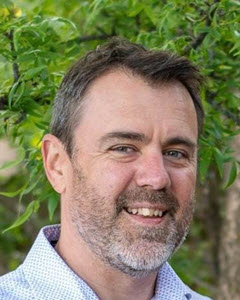
Greg Rodrigo
Faculty Developer (retired), Centre for Teaching and Learning
Community, connection, collaboration and kindness – Greg Rodrigo is this guy
On May 7, Greg Rodrigo, Faculty Developer in the Centre for Teaching and Learning, officially retired from Georgian College. In typical Greg fashion, he quietly announced his retirement without fanfare or attention. For this reason and for his many gifts to Georgian, this week we are focusing our spotlight on Greg Rodrigo!
Greg has been a member of the Georgian College community since August of 1999 when he joined as faculty in the Computer Studies department. Four years later, he assumed the co-ordinator role. His influence in that program area was substantial. One student noted, “With concerns of failing my third semester, I met with…Greg. I expressed my concerns and he showed me more belief in me than I felt in myself. …We came together with a plan…from a struggling student to completion of my fourth semester with a 91 per cent GPA, I have come a long way.”
In recent years, Greg’s most prolific role relates to his work over the last decade where he has used his teaching and leading super powers to support faculty peers as a faculty developer in the Centre for Teaching and Learning.
In 2013, Greg was awarded the 3M College Sector Educator Award with the following citation:
Collegiality, collaboration, and community are the foundation of Greg’s career as a college educator. He believes that a group of individuals becomes truly effective when those people join together as a community in which members are united around common goals and support one another in their respective roles, with the ultimate objective of ensuring student success. With passion, creativity, and compassion, he strives to create spaces where people can be nurtured and can realize their potential.
These words still ring true as Greg has continued to build community by fostering connection and collaboration within our institution and in the larger network of faculty developers. From hosting the legendary 2014 Advancing Learning conference with special guest Canadian Astronaut Commander Chris Hadfield, in which Greg not only coordinated the participation of provincial colleagues, but included several grade six classes from the SCDSB and SMCDSB school boards who were studying astronomy in their curriculum at the time, to orchestrating a collaborative partnership with Cambrian College in offering the 2021 Focus on Teaching Conference at Georgian, Greg embodies the theme of this year’s conference, “Community and Connection.”
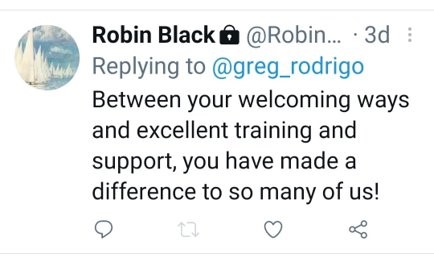
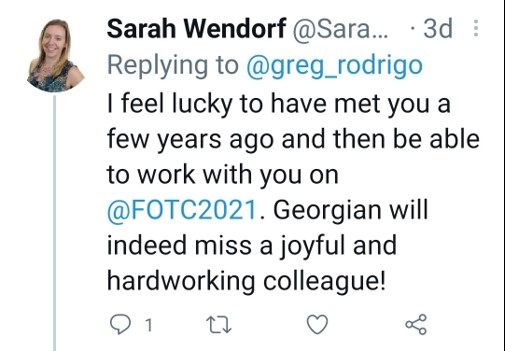
We have all been transformed by knowing Greg. Greg’s gift with coming up with technological solutions to every single teaching challenge has helped countless faculty and students, especially over the last year. But we believe that what will stay with us most of all is his patience, his compassion, his kindness, and his generosity of heart. Greg Rodrigo, thank you for everything you have shared with us over the years. You will be missed. We wish you well on the next leg of your journey, dear friend.
Join us in celebrating Greg and his many contributions to Georgian College on Friday, June 18 from 3:30 to 4:30 p.m. via WebEx.
In the meantime, we have setup a Padlet that you can use to send Greg best wishes and some parting words. Click the pink “+” circle icon in the bottom right corner, or double click anywhere, to add your message. Include pictures and text, and just about anything else to send Greg off.
Greg is the most generous person in the world and his care for students and for his peers is wonderful. To recognize his generosity, we ask that you consider donating to the Student Emergency Bursary fund.
Thank you, Greg, for being… just… awesome!


We believe what will stay with us most of all is his patience, his compassion, his kindness, and his generosity of heart.
-The CTL team
Pandemic Pivot Excellence Teaching Recognition (PPE-TR)
Celebrating our Pandemic Pivot Excellence – Teaching Recognition (PPE-TR) 2020 recipients
Here their words of wisdom and remote teaching hacks!
Each spring, at our annual CTL Focus on Teaching Conference, we have the opportunity to celebrate the commitment of faculty to their professional development and to our teaching community. The Teaching Practice Credential (TPC) has been an acknowledgement of faculty professional development since at least 2008. In order to receive the credential, faculty completed 10 workshops offered through CTL over the year. Faculty would then submit a reflection on how the workshops made an impact in their teaching practice and be recognized for their dedication.
This year, during COVID-19, our normal processes, workshop offerings and community building efforts have been altered and so we decided to celebrate your efforts in a different way as well.
In the CTL, we have been inspired by the ways that our Georgian faculty bravely faced the pivot to remote teaching required by the COVID-19 pandemic. We were equally inspired by those faculty who returned to campus and taught wearing personal protective equipment (PPE), using new distanced teaching and learning strategies. Our Georgian faculty have demonstrated adaptability, creativity, dedication, persistence, resilience and strength. You have connected to our community and brought forward the best you could for your students.
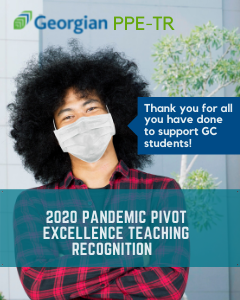
Thank you to all of you who made professional development (PD) a priority and who continued to enrol despite our challenging year. Thank you also for your willingness to share your ideas with your peers! Teaching takes a village. You are our village.
Congratulations to the following faculty who completed professional development last year and then voluntarily shared their thoughts in the survey reflection in order to receive our one-time only Pandemic Pivot Excellence – Teaching Recognition (PPE-TR) for 2020:
- Alexa Farley
- Alyssa Hall
- Angelina Asturi
- Barbara Stuhlemmer
- Cathy Stewart
- Celia Mirco
- Chrissy Deckers
- Daniel Moreau
- Dawn Vincent
- Ekaterina Smirnova
- Elaine Greenwood
- Erin Gilchrist
- Jennifer Belanger
- Jennifer Shelswell
- Joanne Campagna
- Jonathan Gladstone
- Joshua Barath
- Judith Rivers
- Lauralee Proudfoot
- Lindsay Deruyter
- Madelaine Khan
- Maria Puigbonet
- Mary Dobson
- Mary Spencer
- Melanie Doyle
- Pearly Chua
- Rich Freeman
- Rob Harrison
- Samantha Sullivan Sauer
- Serena Dearlove
- Tara Bonney
- Vali Stone
We appreciate your bravery, your commitment to students and peers, and your willingness to share your thoughts, best practices, small wins and ideas.
What advice do your peers have to share? Discover remote teaching and learning hacks from this wonderful group of faculty. Please connect with us synchronously or asynchronously to join peers, build your teaching community and polish your practice. We look forward to seeing you and as always, thank you for being awesome!
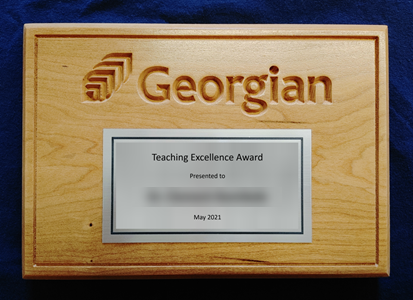
Teaching Excellence Award 2021 recipients
The Teaching Excellence Awards formally recognize innovative and creative ideas developed by our inspirational professors, librarians and counsellors at Georgian
The awards are designed to celebrate people or teams who:
- demonstrate a commitment to excellence in teaching practice, facilitating student learning, or supporting teachers and teaching excellence; and
- inspire the larger teaching and learning community at Georgian College through sharing of practice, mentoring, or otherwise providing support to colleagues.
The commitment to excellence can be in one or several of the following categories of teaching practice:
- Innovative Teaching Strategies
- Educational Technology
- Active Learning
- Equity, Diversity and Inclusion
- Changemaking
- Humanizing / Creating Connections and Community
- Research
Education is the most powerful weapon which you can use to change the world.
-Nelson Mandela
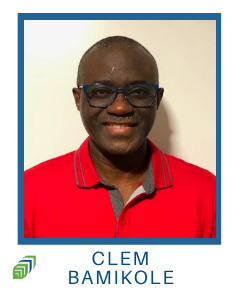
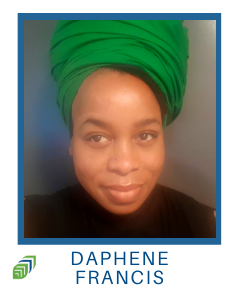
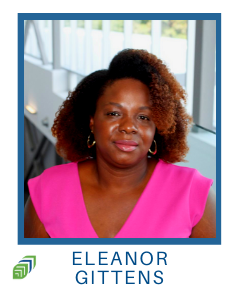
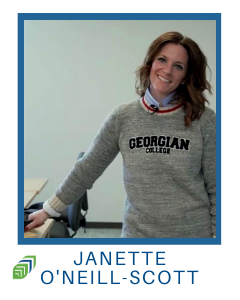
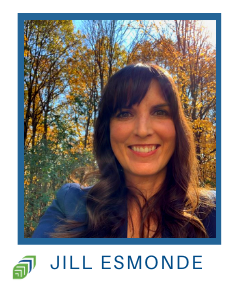
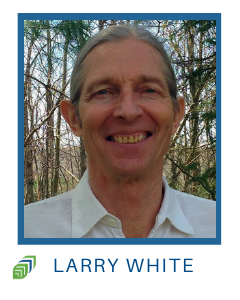
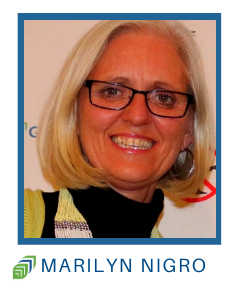
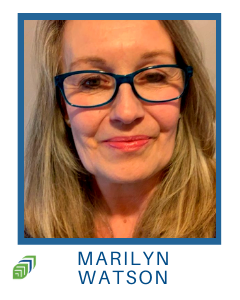
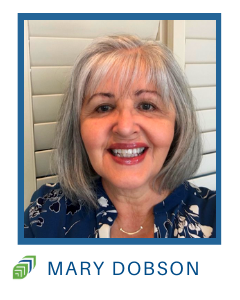
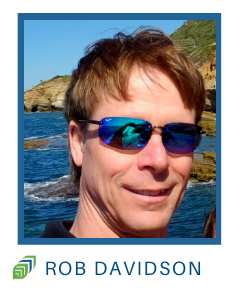

Congratulations to all of the 2021 Teaching Excellence Award recipients. Thank you for being awesome!
This week’s spotlight feature is YOU!
A sneak-peek of the many faculty sharing their knowledge and skills at the Focus on Teaching Conference 2021
Celebrating Connections and Community May 4 to 6
Each year, the Focus on Teaching Conference brings together our Georgian community to share practices, experiences and insights about learning and teaching. The past year has presented unprecedented challenges and has inspired immense learning and growth around teaching and learning. The need for connections and community has never been greater.
We can’t pull off the conference without the help from our amazing community of faculty, which is why this spotlight is about you! Your incredible knowledge and willingness to share your passions with others is what makes this conference incredible every year, so from the Georgian community, thank you! To view our amazing line up of speakers and the conference schedule, please use the buttons on the right of the screen.
We invite you to join us in sharing the richness and depth that connections and community can bring to our teaching practice and our lives. For the first time ever, we will hold the Focus on Teaching Conference over three days, May 4 to 6. That’s right – one day was just not enough!
Thank you for being awesome faculty! We can’t do it without you!
Education is the most powerful weapon which you can use to change the world.
-Nelson Mandela
Jennifer Shelswell
Faculty, Early Childhood Education and Liberal Arts, Human Services and Community Safety
Going virtual last year meant creatively coming up with ways to help students learn concepts and practice them. Jenn made it her business to find ways to engage her students and was happy to share her remote teaching wins!
Tell us about something you did during remote learning that students just loved!
In order to promote learning, Jenn used active learning strategies that helped students truly understand key concepts. She shared one activity in particular that was really appreciated by students.
“I created a whole lesson sequence in one PowerPoint that walked students through an activity where they worked collaboratively to create an information handbook for parents, and a stress and self-regulation activity for children based on a children’s book they were assigned.”
These were ungraded activities and the students completed them anyway! They were so well laid out and so obviously authentic that the students saw real value and participated. Check out the guiding PowerPoint for more information.
As a final activity, the teams shared their ideas with their peers. Importantly, Jenn notes that, “during the team shares, students could see how they could implement the various self-regulation techniques to help alleviate children’s stress when they are out working in the field. They finished this activity with a vast number of resources they can potentially use when they are working with children who feel overwhelmed.”
Not only does this activity help students learn and apply key concepts, Jenn was also guiding them to create and curate resources that will help them in their practice.
What is something new you’ve tried because of remote learning?
Clearly, Jenn is an innovator and up to trying new things. When we pivoted to remote teaching and learning, like many of us, she was concerned with student engagement.
“When we went into remote, I was trying to think of how I could engage students and make learning fun because when learning is fun, students will be more interested. So, I started incorporating fun activities that would keep them motivated during the time I was with them. The CTL sessions I’ve taken have helped me broaden my ideas for what I can use in my teaching and I’ve tried to implement those suggestions.” Thanks, Jenn!
Over the last year, she has maximized use of collaborative tools from Microsoft and Google to engage her students. She states, “I now use collaborative online Forms (for stop-start-continue); PowerPoint and word in my classes.” She uses these almost daily to allow students to connect and collaborate and notes that these tools are “really handy.” Jenn also uses word clouds, like in PollEverywhere, and Changemaking Intention Cards. Find this and other great changemaking resources in the Changemaking and Social Innovation Microsoft Teams channel. Additionally, Jenn has regularly made our Georgian Land Acknowledgement part of her virtual practice.
One new educational technology she has used with success is Google Jamboard, where students can create collages based on a prompt. At the start of the semester, she had students introduce themselves in Jamboard using a combination (at their discretion) of words and pics. At the end of semester, she had her students reflect on their learning by representing their journey using the same application. Students really like working in the program and enjoy sharing their journeys in this way. Her students agreed to share their last journey Jamboard with us. View the class Jamboard here.
Thanks, Jenn, for sharing, and thanks for being an awesome faculty!

Incorporating interactive and collaborative tools is a great way to engage students and make learning fun during remote teaching!
Artefacts
For more information about Humanizing Teaching and Learning you can check out the links above or have a look at our weekly workshop schedule for drop-in workshop dates, times and join links.
If you have any questions, please email CTL@georgiancollege.ca.
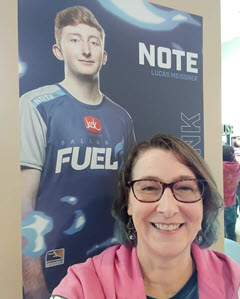
Carol Meissner
Faculty, Business and Management
eSports @ Georgian
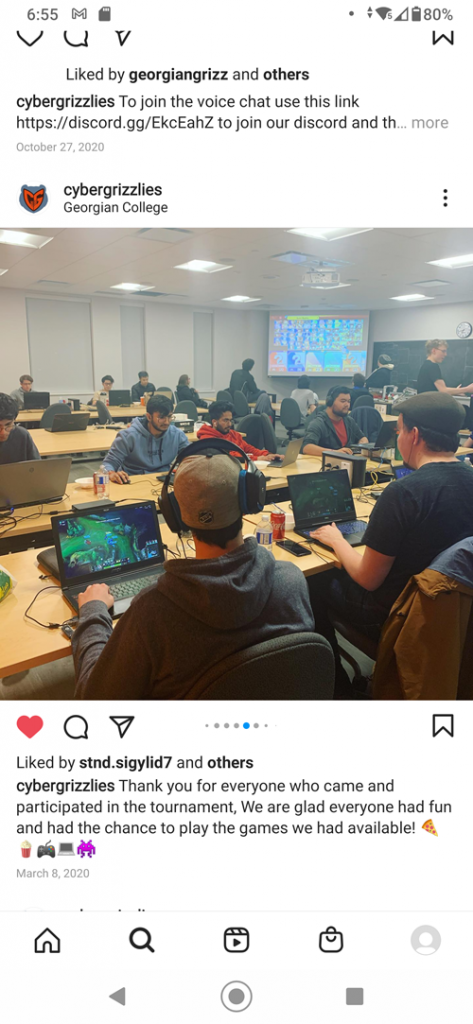
eSports is a competitive world of organized team-based, multiplayer online video gaming. Georgian currently has over 450 students involved with CyberGrizzlies eSports Club, a student-run club that offers online movie nights, casual game nights with students across the globe, and has a student-run team competing in a North American tournament. Just like traditional varsity team sports, eSports brings students with similar interests together, builds essential skills like teamwork, communications, decisive actions and decision-making, but also builds self-esteem and a sense of community. Considered a more inclusive way to play sports and compete, eSports are available to anyone irrespective of gender, mental or physical disability or those who do not traditionally fall under the definition of an athlete.
Tell us about something you did during remote learning that students just loved!
Carol Meissner has been interested in eSports since 2013 when her son introduced her to this world, but it was the move to remote teaching that Carol really saw the need and opportunity to expand eSports at Georgian.
Carol, who is the part-time manager of eSports and who teaches the Business of eSports for the Business and Management portfolio, is also working on a number of campus initiatives to offer more support, funding and space for Georgian’s esports students. One of the big initiatives is to find space on campus. “As much as many are digital natives, I get asked ‘when can we meet on campus’ all the time.” So how does eSports fit into her teaching? CyberGrizzlies uses Discord for voice and text chat, so Carol added Discord as another way for students can reach her. Twitter is an important communications channel in the eSports industry so Carol includes an assignment as a form of discussion board. Finally, she also gamifies her courses using achievements in Blackboard.
Fall 2021 will see the launch of the Ontario Post-Secondary Esports league and Georgian Students will be ready. This summer, Carol will be leading a team of faculty to plan the development of curriculum related to eSports and is hoping interested faculty from all departments will reach out to her.
Thanks Carol, for being an awesome Georgian faculty!
As much as many [students] are digital natives, I get asked ‘when can we meet on campus’ all the time!
Artefacts

For more information about Humanizing Teaching and Learning you can check out the links above or have a look at our weekly workshop schedule for drop-in workshop dates, times and join links.
If you have any questions, please email CTL@georgiancollege.ca.
Randy Ugolini
Faculty, Dual Credit School College Partnerships, Liberal Arts
Authenticity, credibility and being human are a winning combination for remote teaching
One of the upsides of our remote, online work is the increased opportunity for connection to faculty from all of our awesome campuses. This week for our spotlight, I had the chance to talk with Randy Ugolini, faculty at our Orangeville Campus.
Tell us about something you did during remote learning that students just loved!
The students really love the Speaker Series he has set up. He laughed when he mentioned that while we were spotlighting him. He was actually sharing something that “takes me out of the equation”.
In his Entrepreneurial Explorations Dual Credit course, Randy decided to up the ante in authenticity and credibility by inviting guest speakers in to share their experiences. The dual credit students want this kind of authenticity, so “I started bringing in speakers who are entrepreneurs, local to our area, in their 20s or early 30s. I would see an article in the local paper and call them up.” He has also connected with the local Chamber of Commerce. While Randy had started this initiative before the pandemic, he has continued it online and has found it even better. Consistently, the Speaker Series is the most popular part of the course.
These guests bring impactful learning to students. John Gibson, for example, is a local entrepreneur and skateboarder who takes apart skateboards, cuts them up into puny slivers and makes things like watches and knives. He sells these around the world. Students are blown away when he shares his social media and they see he is followed by Tony Hawk. Another guest, a young woman and former Georgian student, has a drywall finishing business – Getting Plastered. She is competing in this male-dominated profession. All of his guest entrepreneurs tell stories of gumption, resilience, perseverance and creativity and students love it.
Randy has built teaching and learning activities around the series. In preparation for the guests, students generate questions, and during the session, they lead interviews and always follow up with the speaker. On his final exam, he asks an essay question, “Of all guest speakers, which did you best related to and explain why? Explain how this entrepreneur connects to one of the four major pillars of the course?” There is no cheating on the final as it is so particular to the students’ experiences. The thoughtful responses are amazing.
What is something new you’ve tried because of remote learning?
Randy says, “One of the things that I’ve really latched onto in our remote teaching is candid videos. I do many quick, little videos for the students.” He notes that just about every other announcement he posts is a video. (See the example). “I’ll do them walking, like a Rick Mercer rant, something goofy with the doodles, or St. Patrick’s Day and my green Doc Marten’s.”
The quality is candid made with his device and a selfie stick. There is no post-production. Students laugh at them, comment on them and they watch them! Because I send them through Blackboard, it brings students into Blackboard to check them out.
Being candid is humanizing. Candid videos are a metaphor for that pedagogical model. Be authentic. Don’t be afraid of being human and letting students see your human side!
Thanks Randy, for being an awesome Georgian faculty!

Teaching nirvana means challenging students without being challenging!
Artefacts
For more information about Humanizing Teaching and Learning you can check out the links above or have a look at our weekly workshop schedule for drop-in workshop dates, times and join links.
If you have any questions, please email CTL@georgiancollege.ca.
Dan Moreau
Faculty, Engineering and Environmental Studies and Math Technologist in Academic Success
Connecting to students in new ways and old ways in a digital world
This week, I had the pleasure of chatting with Dan Moreau, faculty and math technologist. He made math fun for me – no easy task! Here’s what I learned from Dan.
Tell us about something you did during remote learning that students just loved!
“I integrated a short introduction to my Blackboard shell with a friendly message which helped students orient themselves to the course and I also incorporated a picture of myself in the course announcements to help students place a face to the name and humanize the course.” One other strategy Dan used early in the semester included introduction emails. “I sent an introduction to student emails (from BB) before the class officially started to welcome students to his class.”
Speaking of classes, Dan often uses a Georgian classroom virtual background when he hosts synchronous classes. He has shared the picture in case you would like to download and use this classroom space, too.
Dan is a laugher! Students love this, especially for a potentially high-stress topic like math and in remote learning situations as it increases the humanness and engagement. “It makes the class more entertaining – students wonder what math topic or silliness in the lecture I’m going to laugh at next,” says Dan.
Dan has a running joke through the semester. In his first class, he tells students that the question type they are working on is a BEDMAS question (I’m remembering back to high school at this point) and, from then on, when he shows a question and asks what type of question it is, the answer is always BEDMAS. “Every question is a BEDMAS question!” For those of you needing a refresher, BEDMAS is the order in which we solve equations; brackets, exponents, division, multiplication, addition, subtraction. This order never changes, hence all questions are BEDMAS questions. I’m laughing.
Using humour and humanizing a class are very important to Dan as these strategies make students more comfortable to learn. “The rapid switch from in-person to remote has been stressful. We want students to still receive a quality, humanized course.”
What is something new you’ve tried because of remote learning?
In the in-person delivery of Dan’s math classes, he would use classroom blackboard or whiteboards to demonstrate problems. With the pivot to online, Dan needed a suitable replacement and he found Explain Everything.
Explain Everything is paid for by Georgian.
One of the reasons that Dan likes Explain Everything is that it lets him take a chunk of the lecture and place it into Explain Everything and then students have the opportunity to watch and review at their own pace. “I can demonstrate how to work through math examples right in Blackboard. Explain Everything has a whiteboard, voice options, and screencasting capabilities so I can make videos that show all the steps in a problem, providing students with the full picture.”
As an added bonus, it embeds easily into Blackboard and is accessible to students as they need it so it really supports asynchronous learning. Students can watch and practise at their convenience, “and they still get to hear my amazing voice and my horrible dad jokes!”
Dan also uses our Georgian collaborative programs, such as Microsoft Teams and WebEx, to interact with his students. He teaches in one and meets in the other. He finds this really great practice for students as it affirms that skills in one platform can be transferred across the other. Students can apply these skills to other platforms like Zoom or Discord that they may come across. These connection tools have also led to equitable and quality support for all students.
Thanks, Dan, for reminding us about BEDMAS and for being an awesome faculty!

With great power comes great responsibility!
Ben Parker
Artefacts
For more information about Humanizing Teaching and Learning, and Explain Everything you can check out the links above or have a look at our weekly workshop schedule for drop-in workshop dates, times and join links.
If you have any questions, please email CTL@georgiancollege.ca.
Nergis Mazid
Faculty, Liberal Arts
Building a comfortable foundation and setting up organization from chaos at the start of term!
Nergis has been teaching at Georgian for years and has been a champion of equity, diversity and inclusion (EDI) work, including being a team member on the recent successful EDI grant application. You can find her teaching journey digital story in Staff News.
Tell us about something you did during remote learning that students just loved!
Nergis was asked to share something that she did during our pivot to remote teaching and learning, and she shared with us something that she has continued to do and found even more important during COVID-19.
On the first day of classes, she assigns a semester planning assignment” (also known as her “magic document”) to her students. In the assignment (see artefacts), she has students create a 30-day, four-month calendar of everything due for her class and for all others as well.
According to Nergis, “Students love it; okay, maybe not love but at least feel a strong appreciation. They find the skills helpful.”
One of the most helpful aspects of the assignment is the set of questions that lead students to consider their processes and approaches to assignments. This metacognitive focus includes questions like:
What is your process when you move to assignments? E.g. do you schedule them or do them all at once? Students are finding this focus even more helpful given the current circumstances.
Nergis says that the assignment has other advantages. “It gives me a chance to interact with students when my marking load is low. It allows an opportunity to really connect before the term moves on. It is humanizing for the students. Especially in liberal arts because we rarely see students again.”
Lastly, it really helps students understand important concepts such as academic misconduct because it leads to reflection on how they process research, e.g. do they copy and paste, and when they take paper notes, do they acknowledge when an idea is not their own.
“My magic document has been helpful with my online teaching. I’m happy to share it as a word document for other faculty to use.”
What is something new you’ve tried because of remote learning?
Nergis was also happy to share some things she’s tried and some of her lessons learned over the last year.
Her courses are fully asynchronous. She started out the teaching hosting free drop-in sessions. These didn’t work at all. So, knowing that students needed human connection, she flipped her strategy to offering more office hours with greater flexibility. She replies as quickly as possible to emails and offers several times students can connect.
She notes, “I also started running courses Tuesday to Tuesday, with assignments due Tuesday at midnight, so that they have time at the start of the week to ask questions about assignments that have come up over the weekend.” This gives both students and Nergis breathing room. Her motivator was the realization that she likes when her teaching load gives time at the start of the week for preparation, and time at the end of the week to regroup. Her students appreciate this as well. It also helps her avoid holidays that fall on a Monday.
Nergis also uses the Outlook out-of-office email message option to let students know when she is reachable and to manage expectations and put limits on when she is answering student emails. This allows her to manage her time and help students manage theirs, as well.
Focusing on metacognition is a key ingredient for learning. Supporting students’ understanding of their learning process helps them learn their course material.
Thanks, Nergis, for being an awesome faculty!
Being an educator isn’t just transmitting and judging “knowledge.” It is about growth and self-discovery and we can’t expect our students to be open to growth if we resist it in ourselves.
Artefacts
For more information about Teaching and Learning, you can check out the links above or have a look at our weekly workshop schedule for drop-in workshop dates, times and join links.
If you have any questions, please email CTL@georgiancollege.ca.
Todd Deforest
Faculty, Opticianry
Engaging students with real, authentic and exciting assignments leads to great student work and better projects to mark
Tell us about something you did during remote learning that students just loved!
Project Peyton is a project near and dear to Todd’s heart as it has to do with his daughter, Peyton, who has low vision. In this assignment (see artefacts), Todd has students “go out into the world and grab something not accessible to people who have low vision or are blind” and “make it accessible.” Toys and games are the typical focus but applications can be chosen by students as well. Students have designed accessible items such as a tactile tic-tac-toe board which was made to be high contrast, easy to use and easy to clear. Another project suggested a cup that lights up when it is set down so it can be found by a user with low vision. Another student took the recording device out of used greeting cards and recorded the names of items which could then be attached to the items. Todd notes that those card recorders can be used in many ways – thanks for the great life hack! Yet another student created tactile checkers in order to allow the blind to play. Bottom line, students understood the reasoning behind the project and its authenticity made it really meaningful for them.
While Todd has used this project before, this remote version was even more successful as students could really expand their thinking and choose more diverse items. Additionally, students enjoyed sharing their proposed ideas and solutions through PowerPoint videos. One of Todd’s students agreed to let Todd share his project. Check it out in this spotlight. Overall, Todd notes that these were “great projects to mark!” He attributes the success to the exciting and authentic nature of the project. He says that a secret to the success is helping students “connect to our [professional] excitement. Make it interesting. Take knowledge, apply it and enjoy it. Bring them [your students] in as peers!” Next steps – interdisciplinary connections. Todd is interested in looking at ways his students can help solve vision accessibility issues in other areas of our college and how he can partner with different portfolios on student assignments. Any ideas? He’d be happy to connect. Oh, and one other thing he’s tried: Wednesday morning classes with Todd allow for pajamas and coffee. That is fun!
What is something new you’ve tried because of remote learning?
Todd used Flipgrid for introductions and get- to-know-you messages for the first time last year. Using Flipgrid was an easy way to break into online learning. Todd notes that these short, two- to three-minute videos helped students become accustomed to the on-screen teaching and learning environment. Todd has also used Flipgrid for asking and answering questions. Small formative marks associated with these assignments really helped motivate students to complete them. The videos also helped him get to know his students. Having the students first use Flipgrid also allowed him to scaffold them into other virtual technology, including web chats and the final video project. Flipgrid has proved to be a new and helpful app and Todd’s glad he tried it. We’re glad, too.
Thanks for being an awesome faculty, Todd!

“I have not failed. I have just found 10000 ways that won’t work!” (Nic Tesla). This is such an important thing to remember. COVID-19 remote teaching has been all about trying new things and sometimes they may not work. It is okay to fail, but when we do find something that works, sharing it with others so we can build on it is key.
Artefacts
*student has given permission to share the video
For more information about Flipgrid, you can check out the links above or have a look at our weekly workshop schedule for drop-in workshop dates, times and join links.
If you have any questions, please email CTL@georgiancollege.ca.
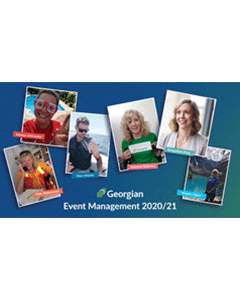
Event Management faculty team
School of Hospitality, Tourism and Recreation
Teamwork and authentic experiences
What do you call a group of faculty working together? AMAZING!
Event management involves networking, meeting and talking to people and designing engaging events. While remote teaching has allowed event management students to continue to work collaboratively, it really took some creative and innovative leadership to support students with designing engaging events. The completely non-full-time faculty team really wanted students to use the pandemic as an opportunity to develop the real and necessary skills for the workplace to set them up for success in everyone’s new reality.
To think differently, faculty decided it was imperative that they all work collaboratively across their courses in the semester. Faculty agreed to develop one assignment for students and have each course support their piece of the puzzle. “Helping students to see how all their courses are interconnected and interdependent was very powerful,” says the co-ordinator, Marilyn Nigro. A willingness to work together in a collaborative way is one thing, but executing it takes commitment and lots, and a lot of communication. “We ask students to work together in groups and collaborate all the time, it was our opportunity to model it.” The team worked together to adjust what and when they were delivering curriculum content and, in some instances, the evaluation component. “COVID-19 or remote teaching was the catalyst to changing how we worked together as a team, but also in how we provide authentic learning experiences for our students.”
Students worked together in the same groups across all six courses and create one event that was pitched to all six faculty simultaneously. Students received feedback at one time from all faculty based on the one presentation, not six different presentations. This continues into the next semester (winter 2021), as students move to implementing and offering their events.
You can check out and join the events at:
- A Peaceful Creation: Join the Georgian Community this March break to make your own dreamcatcher, hear storytelling and learn about Indigenous history in Canada! March 18.
- Cooking Up Hope: Join us for an exciting, virtual cooking class and fundraising event for the Royal Victoria Hospital in Barrie. March 28.
- Let It Brie: Let it Brie is a virtually guided charcuterie board building and beverage pairing event to raise money for Hospice Simcoe! April 10.
- Tails of Joy: All tails wagging and dogs bragging! Learn everything you need to know about dog care through fun interactive workshops! April 11.
Thanks for being such awesome faculty, Event Management team!
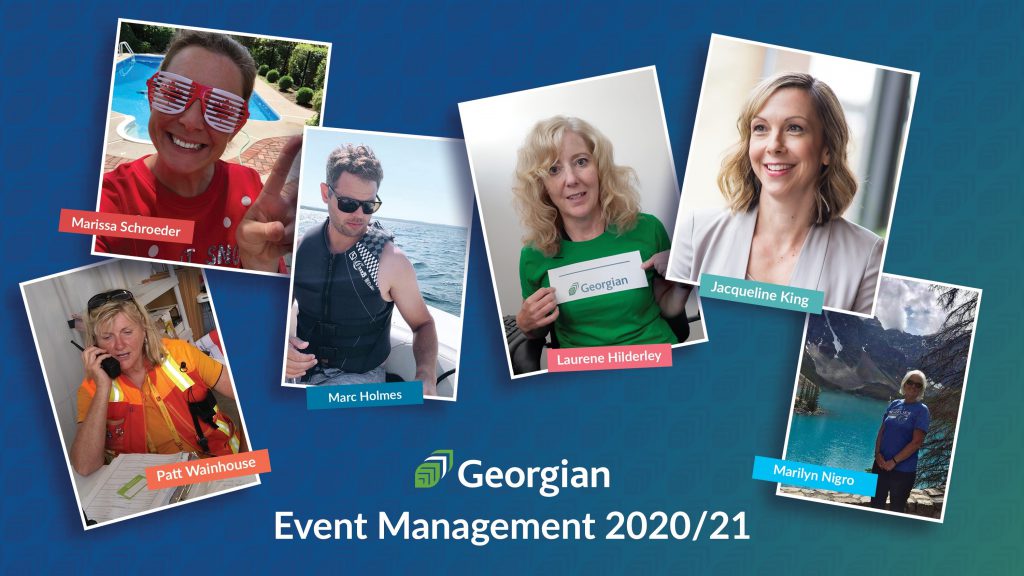
Patt Wainhouse – Project Management
Marc Holmes – Digital Branding and Communications
Jacqueline King – Event Finance and Management
Marilyn Nigro – Coordinator / HR and Volunteer Management
Carolyn Tonin – Risk Management
Ashley Leadbetter – Catering Management
Laurene Hilderley, Sales and Fundraising
We ask students to work together in groups and collaborate all the time, it was our opportunity to model it!
Artefacts
For more information about small group learning experience, you can check out the CTL resources. Small group learning that are not effectively structured and monitored often result in very negative learning experiences for both teachers and students. In small group learning, the teacher’s energy shifts from presenting knowledge (sage on the stage), to structuring and facilitating knowledge creation (guide on the side).
For more information about Community Service Learning, you can check out the CTL resources here. Community Service Learning integrates community service with instruction and reflection to enrich the learning experience, teach civic responsibility and strengthen community.
If you have any questions, please email CTL@georgiancollege.ca.
Isabelle Deschamps
Faculty, Human Services
Asking questions and trying new things are key to remote teaching and learning
Isabelle has a knack for looking at the big picture and responding in a way that really helps students. As a faculty and a researcher, she has a lot to share with us about teaching and learning in our current COVID-19 reality.
Tell us about something you did during remote learning that students just loved.
Two key elements of learning for students are the ability to summarize and the ability to structure their ideas. To support students, I created interactive H5P study notes that they can use as they move through course material. These notes help re-frame the student misbelief that they need to memorize everything. They encourage students use their own words, practice integrating information and reflect on and deepen their learning.
The study notes also act as practice and primer for what is on the mid-term and final. Lastly, they help students with their meta-cognition so they can determine what they don’t know and focus on their skills that are lacking.
I have also created a syllabus scavenger hunt in H5P. Students send me their results by taking a screenshot after completing the activity. I know that they have found and interacted with the syllabus.
Lastly, I’ve used Flipgrid as a way for students to present. I’ve found this application to be a really helpful tool as students seem to feel less anxious. I’ve had a huge turnout of students completing presentations using Flipgrid. Compared to other ways students can submit work, Flipgrid is above average.
Tell us about something new you tried because of remote learning.
Early on in our shift to remote learning, I noticed how some of my top A-grade students from before the pivot were not showing the same kind of success in the virtual environment. Their skills did not seem to transfer to remote learning. It was like they had blinders on and couldn’t connect their on-campus skills to online. For example, they couldn’t manage their time online even though they had been fine in class. So, I helped the whole class by creating a calendar of events (meeting times, assignments, tests etc.) for all their courses using colour-coding. My students found this really helpful.
I believe many of us have the wrong assumption that students who have self-regulatory skills should be able to translate them to the online environment. My observations and experiences in this regard since the pivot have led me to a research project. A peer, Quentin Evans, and I applied for and received a Georgian research grant to contribute to understanding of students’ experiences with online learning. We really don’t know very much about self-regulatory skills in the remote environment so we want to investigate ways to help faculty support students in the development of these skills while virtual (e.g. things we can set up in BlackBoard). We are also very interested in the mental health of students and how lack of these skills can lead to stress and depression for remote students.
The study asks students to share what is helping them and what is not in online learning. So far, we’re learning that by being proactive and intentionally setting up our online environments, we can really support our students. Thinking about our course as one of several a student may be taking should inform our design. For example, if we send students email assignment reminders, and these students are taking six courses, they’ll likely receive way too many emails. This won’t help them with time management and may be overwhelming. But, if we plan early, take a step back, and do something like set up a timeline in Padlet (which I’ve used) for major events in a course we are teaching, then students can see the flow of the semester. This helps them plan more effectively without feeling overwhelmed.
Stay tuned for more information from Isabelle and Quentin about their study!
Thanks for being such an awesome faculty, Isabelle!

Don’t be afraid to ask questions. It is scary to be fully teaching online but if we don’t try anything new, we won’t know if it will work. Don’t be afraid. Students may like it or not but we won’t know if we don’t try. And even if it only helps half of our students, that is half more than would have been helped otherwise!
Artefacts
If you are interested in learning more about H5P or Flipgrid, you can check out the CTL website resources and the CTL weekly drop-in sessions schedule.
Jarrod Otterman
Faculty, Engineering and Environmental Technologies
Becoming an anti-racist educator
There are different ways for educators to learn about anti-racism pedagogues. Becoming an anti-racist as a white person means taking responsibility for your power and privilege with a desire to learn and grow.
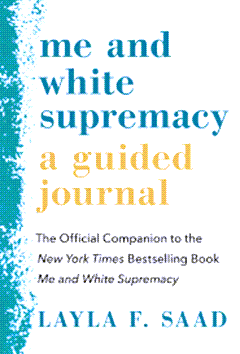
Jarrod was ready for more. “Joining the Me and White Supremacy Learning Circle was transformative to me and my teaching.” The title was scary but Jarrod had confidence in the group leader, Jill Esmonde, to create a safe space to grow and stretch; not tear.
A learning circle is designed to bring people together to understand problems and to empower them to make choices and to take action.
Jarrod started his professional career as an engineering student at Ryerson University. In 1998, Jarrod was looking for a change and decided carpentry at Georgian College was the right fit. After graduation, he started his own business. In 2009, Jarrod and his family moved to Barrie and he started renovating and flipping houses in Toronto with Canada’s Ty Pennington, Toronto Life. It wasn’t until 2013 that Jarrod felt the pull back to Georgian and decided it was time to share his wealth of knowledge and experience with the next generation.
The past few years saw Jarrod stretching his teaching skills. Along with learning new technology, Jarrod was learning about the art of teaching. Attending the Instructional Skills Workshop (ISW) that focuses on the development of teaching skills opened his eyes to the possibilities of effective teaching. “Brene Brown’s work really spoke to me. I read a lot of her work”. Then, a colleague suggested Jarrod join the Me and White Supremacy Learning Circle.
“The book is not about looking at others, but an opportunity to examine ourselves. I remember thinking, ‘that’s not me, I am one of the good guys’. But good intentions or not, we are all products of the system, and it is going to take all of us to change it. Its time to do better, because we can.” As a call to action, Jarrod organized support for the Gord Downie and Chanie Wenjack Fund that resulted in the largest donation for the campaign.
Since participating in the learning circle, Jarrod has decided to lead his own learning circle. He recommends anyone interested should join a group. “You can’t just read this book; you need a group to talk to and work through the learning. This learning is important to anyone in a position of influence, like teachers.”
Thanks, Jarrod, for being awesome faculty!

You have to be ready to talk about it. [Me and White Supremacy] is not about looking at others, but an opportunity to examine ourselves.
Artefacts
If you are neutral in times of injustice, you have chosen the side of the oppressor.
Desmond Tutu
Racism and systems of oppression are not things that happen “out there” in the world outside of our classrooms. Indeed, they are present in all of the spaces we occupy, all of the interactions we have, and certainly are present inside our classrooms. If we are not intentionally anti-racist in our practices, we are unintentionally reproducing the systems of inequality that we seek to dismantle.
If you are ready to dive into applying anti-oppressive practices, have a look at the teaching resources. The upcoming events and CTL offerings will be updated on our homepage regularly.
Sue Slessor
Academic and Career Preparation (ACP)
Tell us about something you did during remote learning that students just loved.
Students returning to school in ACP often lack confidence, are nervous and need support. Sue has found that checklists help with small, scaffolded wins to move students from early lessons (e.g. grammar, paragraph and essay structure through to building a full research paper). Students are not as overwhelmed by looking at small pieces and steps rather than the end target.
While the templates existed before COVID-19, what is new is how to access them and the resources around the templates to help students. A single student’s question becomes the basis for a shared repository of steps in BlackBoard that will benefit all students.
In ACP, students enrol in classes in small cohorts or individually. Courses have traditionally only been delivered in person. As such, students submit tests in person on paper. With COVID-19, submission became a problem! So, we started to use One Drive for scanning of tests. Each student now uses their One Drive folder and the embedded scanner right from their phone. This has worked really well, and feedback from students is strong.
What is something new you tried because of remote learning?
Every campus at Georgian has an ACP department. During COVID-19, we have actually had more opportunity to connect. We are now sharing resources between faculty using Microsoft Teams and this is really fostering our community. We are also adopting more Open Educational Resources to fill in our curriculum.
Thanks, Sue, for being awesome faculty!
Right now, we are all still learning and that is okay, and it is an important message for students. We are working together through COVID-19 and remote learning as a team. Education is serious and we need to deliver quality, but we also must be real with our students.
Artefacts
If you are interested in learning more about Microsoft Teams or Open Educational Resources, you can check out the CTL website resources and the CTL weekly drop in sessions schedule.
Krystal Buchanan, MScN, BScN, RN, PN
Program Coordinator and Faculty of Health, Wellness, and Sciences, Orangeville and Barrie campuses
Finding ways to connect students to the learning
Krystal always wanted to be a nurse and in 2012 she jumped at the chance to join Georgian College and share that enthusiasm with Georgian students. Finding ways to connect students to the learning and encourage them to be curious and passionate about the profession was important to Krystal. Incorporating educational technology into her teaching practice was a way to connect students to the learning and remote teaching really pushed her to try several new technologies. Not all the technologies were a hit, but through trial and error, Krystal has found some real gems that fit her students’ needs.
H5P is one of those gems.
H5P helps create rich and interactive web experiences more efficiently by simply using a web browser. H5P content is responsive and mobile friendly, which means students experience the same rich, interactive content on computers, smartphones and tablets alike. One of Krystal’s favourites is the quiz feature.
Each week, students have the chance to test their knowledge of the weekly learning at either the beginning or end of class. The quizzes are no stake evaluations that summarize the key points of the week and reflect questions students may see on an evaluation in the future. Students can repeat the quizzes as many times as they like. Krystal admits, it does take some time to set them up but once developed, they can be reused repeatedly. The H5P quizzes are embedded into Blackboard so students don’t need to go to another window or platform and the results and feedback are immediate. These quizzes can be formative evaluations that count for grades and linked to Blackboard grade centre, but for Krystal’s purposes, she uses the H5P quizzes as practice exercises.
Thanks, Krystal, for being awesome faculty!

When you take the opportunity to try something new, although time consuming in the beginning, it usually has long lasting benefits to not only the student but to the professor. H5P has transformed my teaching practice and made my online class more attractive, interactive, engaging and fun!
Artefacts
If you are interested in learning more about H5P, you can check out the CTL website https://www.georgiancollege.ca/ctlae/learning-technologies/h5p/ or several of the CTL weekly drop in sessions offered https://www.georgiancollege.ca/ctlae/#workshop-schedule
John Young and Brian Pyke
Centre for Marine Training and Research, Owen Sound.
Simulations in remote teaching and learning. Steering the simulated boat remotely!
John Young and Brian Pyke are leaders with The Centre for Marine Training and Research (CMTR). They are also leaders in pivoting in-person simulation learning experiences to virtual ones when a global pandemic happens! Georgian leads in marine simulation and on site simulators offer students opportunities to familiarize themselves with ship handling knowledge paramount to safe marine operations. Marine simulation has reached an unprecedented level of sophistication, allowing students to achieve some required sea time. A number of real-time voyages required for certification can be substituted with virtual voyages in an approved simulator facility.
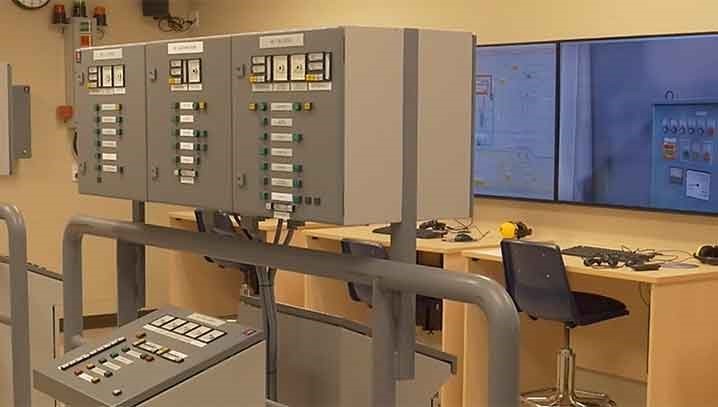
In the before-times, faculty and students share common spaces in the Kongsberg K-sim engine room simulation system where two instructor stations, an engine control room, engine room, and generator room are used by participants. The main engine room is equipped with environmental speakers and CCTV. Additionally, there are eight-part task workstations. The K-sim meets all STCW requirements for marine training. The Kongsberg Engine Room simulator has also received the Det Norske Veritas (DNV) type approval certificate.
But what happens when a pandemic hits? How can the experiences of onsite simulation with specialized equipment and software be replicated virtually?
John and Brian rose to the challenge and found a way to do so. Based on the revamp by this team, students can now participate in a virtual live session while connecting to the K-Sim Connect Classroom. During the session, they can work on their individual K-Sim Connect engine simulator. This pivot has led to enhanced student communication and information sharing while participating in the virtual-live experience. Students were able to complete a cold engine start from their home on a simulator system in Norway, with the test being loaded by the instructor from St. Catharines, while under supervision from Transport Canada in both Ottawa and Sarnia. During the course, over 60 hours were taught virtual live with students sharing their work on the in-cloud Kongsberg full engine simulator, while also simultaneously communicating with the instructors and other students on WebEx. According to the duo, Cisco WebEx has been a great teaching tool.
According to Brian and John, this virtual delivery of simulation exercises has “exceeded previous in-classroom interaction and as such became a real improvement in delivery and student experience overall.” This mode of delivery also ensures that course hours of interaction are fully documented and met, as mandated by Transport Canada.
Thanks, John and Brian, for being awesome faculty!

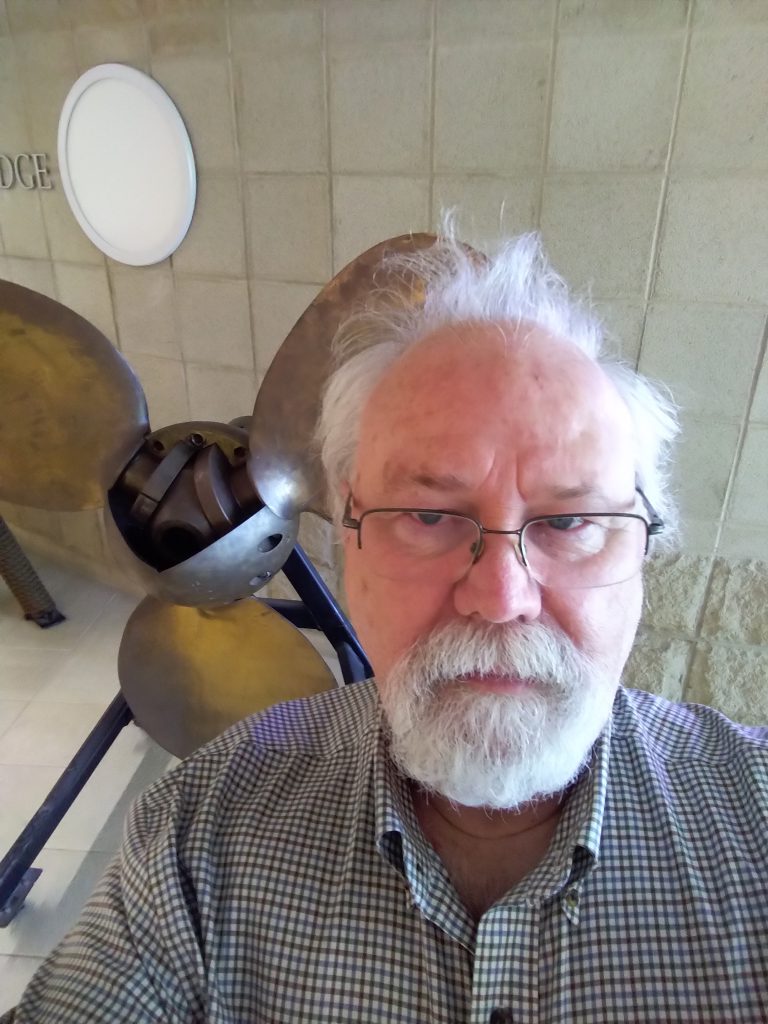
This new remote delivery of simulation exercises has exceeded previous in-classroom interaction and as such became a real improvement in delivery and student experience overall.
Artefacts
Don’t forget to check out our regular drop-in schedule in the email blast and on our Centre for Teaching and Learning website.
- LOTTR and LOTTR Next Steps
- Foundations of Teaching and Learning
- Technologies supported in CTL
- Drop-in schedule
If you have any questions, please email CTL@georgiancollege.ca.
Joanne Campagna
Faculty and co-ordinator of the Honours Bachelor of Business Administration, Management and Leadership degree program
Serial collaboration and professional development participation help Joanne model these for her students
Joanne uses Bitmojis to motivate students and humanize her courses.
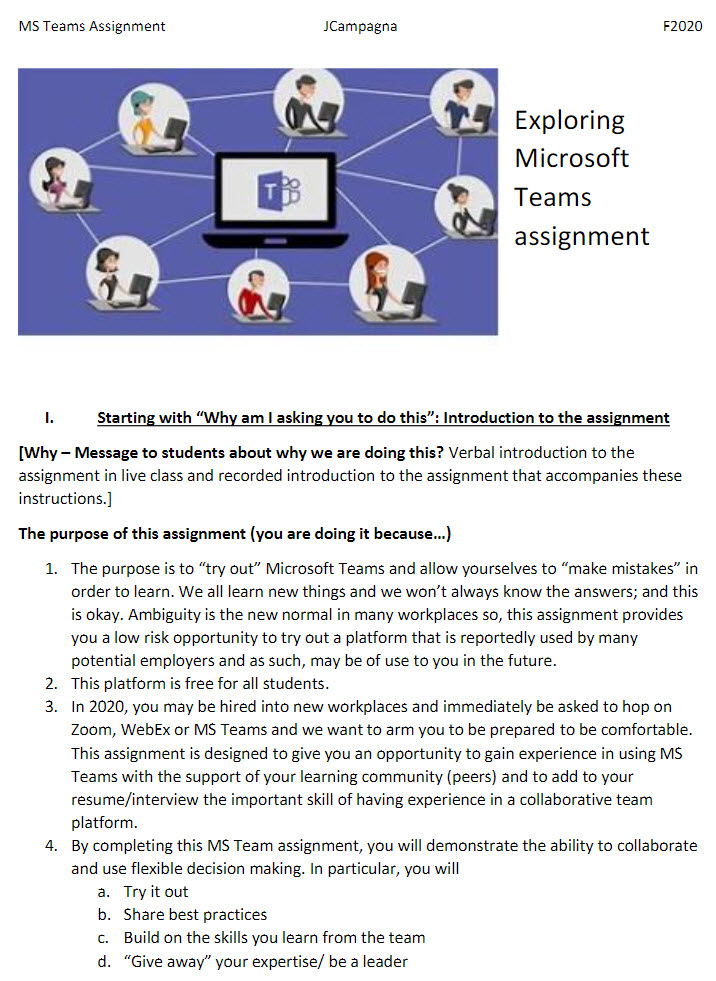
The Explore MS Teams assignment is an example of how Joanne encourages students to try new things and risk failing at them in order to learn. This low-risk formative assignment honours the learning process.
Joanne is what we would call a serial collaborator and personal development (PD) participant. With the guiding frame of collecting and sharing, she has been a regular participant in our CTL sessions since she started in Georgian in 2010. Her strong belief in community and collaboration has led her to connect to peers and to model the same for her students.
As the co-ordinator of the Honours Bachelor of Business Administration, Management and Leadership degree program and a faculty in the program, Joanne recognizes the need for 21st century skills for her students. According to Joanne, “collaboration, dealing with ambiguity, and being flexible are among the most important skills that students need in order to succeed in today’s often ambiguous world of employment.” As such, Joanne uses frames such as human-centered design thinking to plan her courses and lessons. Steps in this design methodology include empathizing, defining, ideating, prototyping and testing. This framework has helped her students learn the very key concept that “there are no bad consumers but rather, bad products!” and to always consider humans first. Her students, reflecting on their participation in an in-class empathy workshop offered by the Centre for Changemaking and Social Innovation, “got the message.”
As the faculty advisor for the on campus interdisciplinary Enactus Team, she supports these meaningful lessons for students in co-curricular activities. She helps students “hack” social and societal problems each year. During their first year, the Enactus team considered ways to alleviate social isolation and created the “Say My Name” Project and the Georgian 101 book for international students arriving to Canada. These projects were honoured at the National Enactus conference where the team won the Rookie Team of the Year Award. This year the students are working on two changemaking projects looking at two of the United Nations SDGs: Planet Heroes where they support the engagement of local grade four and five students in climate action and in a digital storytelling project for local seniors. The team has just been awarded a $2,500 grant as part of the Canadian Tire Youth Empowerment Project Accelerator. Joanne has also been awarded a grant and has been recognized by Enactus with the John Dobson Fellowship Award for Faculty Advising. Congratulations!
In her classes, and her co-curricular activities, her starting point is answering for the students the question “why?”/ In order to answer this question and demonstrate her dedication to lifelong learning, she regularly participates in professional development offered by CTL as well as offered externally. She is a member of several teams on campus and regularly practices what she teaches in terms of collaborating and trying new things. She is a member of several Communities of Practice in order to collaborate and learn with peers. Some of her favourite tools and content she has risked trying and now uses include:
- Microsoft Teams
- Screencast-O-Matic
- Flipgrid
- Poll Everywhere
- Padlet
- digital storytelling
- break out rooms in WebEx
- Doodly (see video on the right)
- changemaking workshops including human-centered design thinking and empathy building
According to Joanne, series such as LOTTR Next Steps and Foundations have provided great reminders and suggestions to help with remote teaching.
In her classes, she has found success with simple formative assessments such as the artefact attached that allows students to explore something new with low risk and with the resulting opportunity to learn and share lessons with peers. She is also always encouraging! The Bitmoji image above (an idea gleaned from a peer faculty, Carol Meissner) is one way she encourages her students. Other ideas include one-on-one meetings with students (if at all possible), asking students to share their expertise in classes as often as possible, and hosting “ask me anything?” portions in class. It is also important to record sessions and add closed captioning to ensure the lesson is accessible for everyone.
Thanks for being an awesome faculty, Joanne!

As faculty, for every student we connect with, we have an opportunity to be a significant, positive, kind moment in that student’s week.
Artefacts
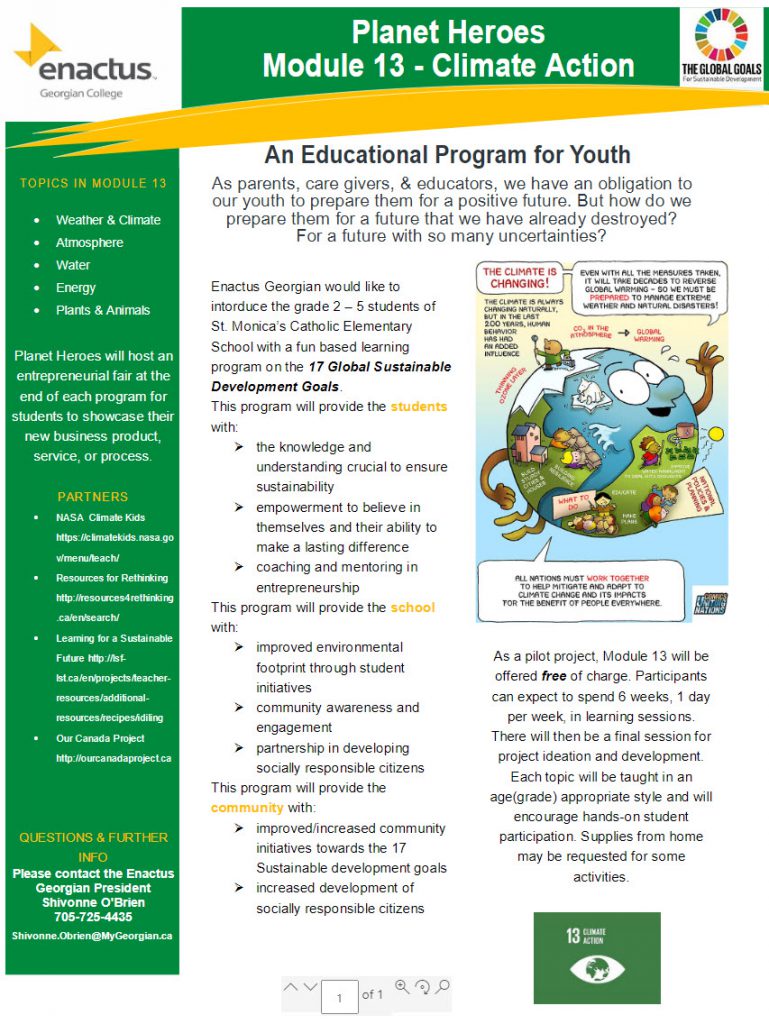
- Introduce concept from text reading .
- Centre for Changemaking and Social Innovation (CCSI) – Laura Koza and Adam Dagenais came to class and executed a workshop on design thinking,
- Reflection and discussion board: Reflect on the learning from today. Below are some prompt questions:
- What is design thinking? What is human centred design? In your business (or future dream job) who is the customer? Remember, there are no dumb users. How will you know what they need? What did you learn? (two points)
- Example responses:
- “This was a very educational class and one of the most important things I learned is the importance of accepting failure. What this means is failure is extremely important as it shows you the things that you need to work on a helps you learn lessons so that in the future, you won’t make the same mistakes and have a better chance of succeeding later on.”
- “In regard to today’s lesson, the presenters introduced design thinking as a process consisting of five steps. These steps include emphasize, define, ideate, prototype, and test. This process helps to define what the problem is and which challenges lay with it. The main focus is based on the idea of solving the problem for the end user. In the Ted Talk watched, Timothy was trying to create a solution for hospitals with the end user in mind, making the right way to use it the easiest. From watching this Ted Talk, I learned that your business ideas and plans will not be successful unless you have the end user in mind. It’s important to remember that what works best for you, isn’t always what works best for your end user customer. Putting the research and time into discovering who your market is and define what their wants and needs are will make you successful and add overall more value to your product or service.”
- Comment on peer’s discussion board posts.
- On tests, ask questions like “what is design thinking?”. The question was: “There are no dumb people, just dumb products.” In a short essay, reflect on the quote above and describe human-centred design thinking and the process endorsed in this view of business. Give an example of what that might involve. Ensure to define the terms you use.
- Example answer: “Having empathy is key. You need to be able to form a detail insight and awareness of consumers and a great way to do this is getting out of your bubble, putting yourself in their environment and dealing with them face-to-face. Human-centred design thinking involves being able to empathize, defining the problem ahead, having perspective and being able to come up with many solutions, having many prototypes and testing the products themselves. One big takeaway from human-centred design thinking is that failure is the key to success; it is a learning tool.”
Don’t forget to check out our regular drop-in schedule in the email blast and on our Centre for Teaching and Learning website.
- LOTTR and LOTTR Next Steps
- Foundations of Teaching and Learning
- Technologies supported in CTL
- Drop-in schedule
If you have any questions, please email CTL@georgiancollege.ca.
Grant VanderBurg
Partial load faculty – Liberal Arts, dual-credit and Health, Wellness and Sciences
Building strong foundations
Coming into teaching at the postsecondary level, I have to admit that I had a certain naivety, or feigned confidence perhaps, that my knowledge and teaching abilities were already where they needed to be. Prior to arriving at Georgian, I was a teaching assistant during my masters for a few courses. Then, I went on to complete my B.Ed. with a specialization in adult education. Like everyone coming into the field, we were students for a large portion of our lives. So, the assumption was that I knew what to do and I knew how to do it well. This notion was quickly dispelled!
During my first semester teaching at Georgian, I connected with so many amazing people including: support staff, librarians, other faculty, and very helpful program co-ordinators, such as Mark Dorsey. Since I was new to Georgian and teaching postsecondary, Mark mentioned that I should look into the Foundations Workshop series. He gave me a great synopsis on the basics of it and sent me a link that showed all of the workshops which could count towards the Teaching Practice Credential (TPC). This was a pivotal moment as it connected me with CTL and opened my eyes to the wide variety of learning opportunities and professional development that we could access as faculty. I was beyond appreciative that most of these workshops, lunch and learns, and other similar opportunities were all free for Georgian faculty. It is always great to engage with the expertise of the amazing facilitators at CTL, as well as have the opportunity to connect with other Georgian faculty. I cannot believe how many conversations at workshops have led to the sharing of teaching resources, leads on teaching opportunities in areas I never would have thought I could dip my toes into, and friendships that started from something as small as a quick a four-corners activity.
All of these skills have translated into the classroom and I am always excited to keep growing and improving my teaching via CTL’s offerings. It is difficult to pick one tool or teaching strategy that I have used from the myriad workshops and lunch and learns I have attended. This made trying to decide which artefacts to include such a challenge.
I chose Quizlet as an app that I have used for test review in the past (think similar to Kahoot!, but more team-based and higher stakes), as well as a small little trick in BlackBoard, using Adaptive Release, to ensure students are covering material without any marks associated (which can certainly be a tough sell most days). Finally, I’ve included an artefact showing what types of additional resources better engage students. Small tips from CTL facilitators reminded me of the type of learning that I enjoyed in my academic journey, including the use of bold and engaging visuals. Now, when I am looking for an article or piece of information for students to cover, I think to myself, “would this be something I would enjoy reading if I was not interested in this topic to begin with?”. This has led me to dig for great articles like the “The State of Food Security and Nutrition in the World” by The Food and Agricultural Organization (FAO) of the United Nations (2019). This article is more akin to an infographic as it has amazing charts and image transitions.
I have also had the great privilege of helping faculty as a BlackBoard Power User (BPU). It has been great to work with team leads Kate Quinn and Matt Garwood, as well as the rest of the BlackBoard support team in answering questions from other faculty at Georgian and helping them leverage BlackBoard to meet their students’ needs. In this regard, I am beyond happy to give back to the Georgian teaching community and share the knowledge and skills that CTL have helped me build over the past few years.
From Foundations, to OCDP, to the workshops at Georgian Days, and all of the online webinars since our pivot last March, I am very grateful to have learned so much already and to keep learning as we continue into each new semester. I cannot express my gratitude enough to CTL, and everyone I have met here at Georgian, for providing their time and expertise in showing me the ropes. I look forward to paying it forward as I go forward in this foray of teaching! Perhaps I need to take a workshop or class on alliteration. I am sure that CTL offers something in this domain, or can help connect me to a helpful offering in this regard.
It looks like you’ve happily got the handle on the alliteration, Grant! Thanks for being an awesome faculty.

It is about analyzing what you are currently doing, and then trying something new that may work even better.
Artefacts
The Foundations Series will be running from 1 to 2:30 p.m. for six weeks starting on Tuesday, Jan. 26, 2021.
This six-part series of workshops, currently offered by synchronous remote delivery, has been designed to help faculty continue to explore their teaching and learning practice with a particular lens on foundational principles of our profession and on connecting with our peers across disciplines and from remote locations, in order to build our teaching community. The series is suitable for faculty at any stage of their career and will offer faculty opportunities to connect with other teachers and increase skills and knowledge related to postsecondary teaching and learning with a remote twist.
Through participation in these sessions, faculty will have the opportunity to:
- examine and apply principles of teaching and learning;
- share ideas and strategies across disciplines;
- interact with peers to discuss teaching practice;
- use a variety of teaching technologies;
- gain information on support resources for teaching; and,
- connect with the Georgian College community.
You can register for each session in Halogen:
- Postsecondary Teaching and Learning
- Planning Instruction
- Active Learning Strategies
- Intro to Postsecondary Assessment
- Designing Meaningful Assignments
- Faculty Evaluations and Continuous Growth
Designing Meaningful Assignments
Also, don’t forget to check out our regular drop-in schedule in the email blast and on our Centre for Teaching and Learning website. If you have any questions, please email CTL@georgiancollege.ca.
Jack Yan
Health Wellness and Sciences
Innovative remote learning experiences
“Teaching martial arts online? How do you kick and punch each other? Is it some kind of Matrix?” These are just some of the comments Jack Yan received when we pivoted to remote learning.
Jack Yan grew up in Hegang (鹤岗), a coal mine city in northern China in Black Dragon River Province (黑龙江). He survived the great famine in late 50s and early 60s and his nine ½ years of primary and high school covered exactly the years of the Great Cultural Revolution. He was mostly home schooled. He was lucky enough to have well-educated parents who had a cellar full of thousands of books from red letterhead government documents, Chairman Mao’s Red Books to books like Wuthering Heights, Great Expectations and War and Peace. He read most of the Chinese classics in their original old Chinese. Jack started his martial arts training in 1966 at the age of seven. As non-government organized martial arts training was banned, his training in those years was underground – in his shifu’s (teacher) backyard. After China started the reform, martial arts training has been highly promoted and even universities began to offer degree programs. Jack continued his training and earned and a Ph. D. Degree in Chinese Martial Arts from Shanghai University of Sport under Professor Qiu Pixiang (one of the top ten Wushu professors of China).
In 1976, Jack became the youngest high school teacher at the age of seventeen. He taught music through a school band, Chinese and physical education. He was also on loan to a local performing company playing French horn on a Henan Yu Opera (河南豫剧) show. Eventually, Jack moved to Canada to start a new journey and obtained a Master’s degree from Western University in political science. While working in the high-tech sector, Jack always kept his martial arts practice. He even started a university martial arts club at Western that led to his current private martial arts school in Richmond Hill.
Jack Yan is a 12th-generation Chen’s Taichi inheritor – one of the 18 inheritor disciples of Grand Master Chen Zhenglei (a major gate keeper of Chen’s Tai chi). He currently holds 7th Duan of Chinese Martial Arts and has been teaching Tai chi and meditation systems for over 20 years.
With all this experience, Jack was very comfortable teaching Tai chi to the Acupuncture students at Georgian College. Then the pandemic hit, and like many of us, the challenge to deliver his classes remotely began.
According to Jack, “Traditionally, the course has always been in a face-to-face setup in a gym. When we moved from in classroom to online classes, my students and I went through a period of interesting adjustments. My challenge was how to keep the students’ attention and interest level high.” While martial arts training includes kicking and punching each other, there is a lot of individual training required too.
“I found many of the students were having a hard time staying focused. I connected with my colleagues, David Liu and Christine Lang, who offered me great help. By the end of the semester, the class was convinced that online learning is possible and can be fun.”
Jack offers the following ideas for remote teaching:
- For screencasts and videos, make sure you have a good microphone. If they cannot hear you properly, you will lose them in no time. Video quality is secondary to audio.
- Get the students involved. That worked like a charm. Getting the students to share their thoughts, ideas and feedback kept them involved and engaged.
- I try to plan each of my classes like an episode of a TV show. I have a theme and I have characters in my stories (apologies to those friends who I made into bad guys).
“I’m looking forward to returning to the physical classroom but in the meanwhile I am enjoying this new learning journey”, says Jack.
Thanks, Jack, for being an awesome faculty!
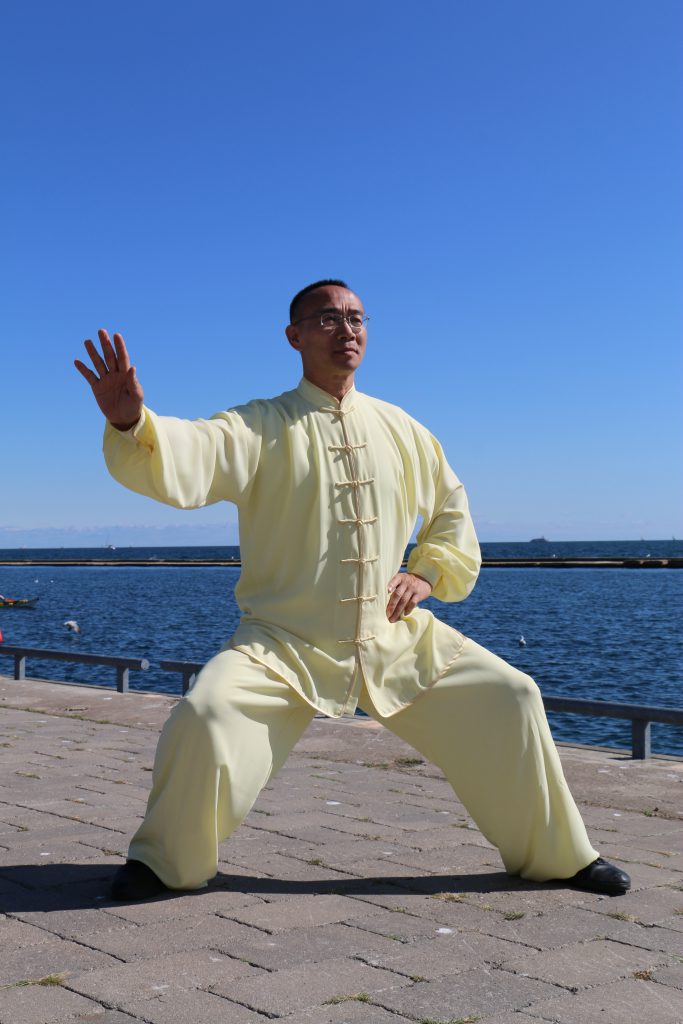
Traditionally, the course has always been in a face-to-face setup in a gym. When we moved from in classroom to online classes, my students and I went through a period of interesting adjustments. My challenge was how to keep the students’ attention and interest level high.
Artefacts
For more information about the Ontario Extend Community of Practice experiences and upcoming sessions please visit the Centre for Teaching and Learning website. We are currently offering CoPs for the Technologist and Curator modules. Stay tuned because in January, we will be offering a brand new experience with the Experimenter module!
You’re also invited to join the Ontario Extend Microsoft Teams channel and engage in the conversation!
Looking for info on how to use Microsoft Teams? Visit the Georgian CTL Microsoft Teams site.
For the most up to date listing of workshops please visit the Centre for Teaching and Learning’s website. If you have any questions, please email CTL@georgiancollege.ca..
Kimberly Ball
Faculty, Hospitality, Tourism and Recreation
Community of practice for professional learning
Teaching remotely definitely comes with struggles, and I was looking for ways to engage my students and encourage their participation. I have worked at Georgian College since 1998 in the school of Hospitality, Tourism and Recreation. I have also worked at the City of Orillia; I was the director at Fern Resort and now I am the Events Coordinator at Quayle’s Brewery. All of these experiences involve connecting with people, chatting and engaging them in different ways. I realized with remote teaching and learning, I needed some new skills. I reached out to CTL and completed the LOTTR and started the LOTTR next steps course.
I have also participated in two Ontario Extend Community of Practice experiences (Technologist and Curator) offered through the CTL. The Ontario Extend program is a suite of six self-paced, online learning modules; Teaching for Learning; Technologist; Curator; Collaborator; Experimenter and Scholar. The modules are designed to empower educators with technology and pedagogical practices and provide access to research from colleagues in an Extend Community Bank of shared resources. The Community of Practice experience facilitated through the CTL (via Microsoft Teams), helped me make new connections with other faculty from around the college and opened my eyes to other teaching methods and ways to make my online classroom a more professional, higher learning environment. The modules take anywhere from four to six hours each to complete. However, they fit my life because there is no set schedule or timeline.
I decided to try an introduction assignment to get to know my students and help build community. Each student had to produce a video of themselves as a manager, introducing themselves to new staff. It worked out amazing. It really captured their interest and students loved it. I also learned that students still have questions and need a chance to connect with me. Normally I would simply stay behind after class, but now with remote teaching, I simply stay online. I am the last one to log off which allows students to approach me without intimidation of a full class. Students know I am available, and they have a chance to connect or ask a quick question. If it is a bigger issue, I will suggest we set a time to meet or direct them to resources, but most questions are simple, and it helps that students do not have to wait for an answer.
I am a super organized person and found the change to remote teaching disruptive. So, to feel organized I started by organizing my workspace at home. I now have a large monitor and keyboard and a dedicated space to work (not the kitchen table). I believe a workspace with a comfy chair leads to your success. I also found the LOTTR and LOTTR next steps helped me with organizing my weekly learning and Blackboard shell. I no longer simply post my PowerPoint notes and announcements, but I am using videos and curating resources to support student learning. Each week in my synchronous WebEx classes, I now use the breakout sessions. In the larger class, many students are too intimidated to turn on their cameras or speak out. A smaller group makes this much more comfortable for them. I feel like we are all learning as we go but the amount of support from the Georgian community has been incredible.
Thanks, Kimberly, for being an awesome faculty!
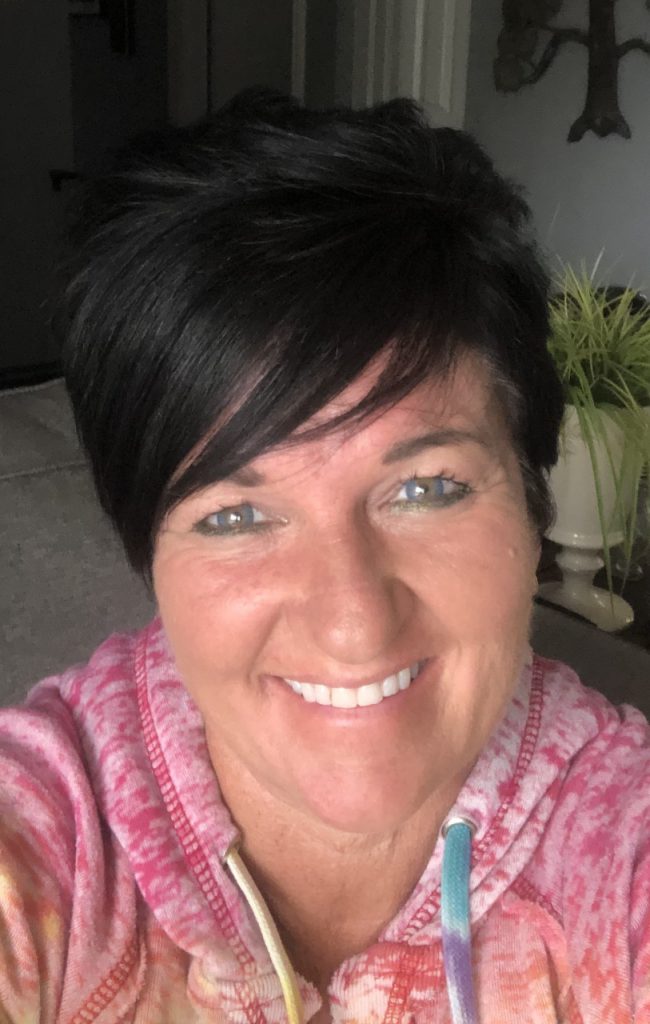
I feel like we are all learning as we go but the amount of support from the Georgian community has been incredible.
Artefacts
Technologist module
Blackboard is used at the College to act as a shell for student information for each of their courses. All the information including course outline, syllabus, tests, assignments, Power Points etc are all posted. I plan on using a screencast to help students navigate their way through Blackboard which will not only put them at ease for their upcoming course but ensure they are aware of all the expectations of the course.
Experience in the classroom, evaluation and communication with students helps me to understand. During the current pandemic, we have shifted our student learning to online rather than in the classroom. My empathy map demonstrates the student’s struggles of the online classroom
Curator module
For this OER activity, I have found a website featuring a blog on five ways to deliver excellent customer service. You will notice it shows examples of visual graphs, articles and video. The other video I found which I also wanted to add as an amazing example of customer service was found on YouTube:
For more information about the Ontario Extend Community of Practice experiences and upcoming sessions please visit the Centre for Teaching and Learning website. We are currently offering CoPs for the Technologist and Curator modules. Stay tuned because in January, we will be offering a brand new experience with the Experimenter module!
You’re also invited to join the Ontario Extend Microsoft Teams channel and engage in the conversation!
Looking for info on how to use Microsoft Teams? Visit the Georgian CTL Microsoft Teams site.
Donna Naylor and Jennifer Hickey
Faculty, Liberal Arts, English for Academic Purposes
Calling all collaborators!
Meet Donna Naylor and Jennifer Hickey, faculty in the English for Academic Purposes program. These partners in crime discovered a shared interest in collaboration and student-centred experience. Whether teaching courses together or separately, they have always tried to connect students within the EAP program and to the greater Georgian community. They are driven to find practical ways of supporting English language learners in building strong foundations for success in postsecondary and beyond. With classroom dynamics constantly in flux (and now online), they jump at the chance to get creative and engage students as partners in their own learning experience.
They aren’t alone in their approach. According to Donna and Jenn, “we are part of a fantastic EAP team backed by Corinne Whitney (Program Manager) and Helen Pearce (Dean) who are open to and encourage new ideas and creativity.” They work with several colleagues and long-time believers in experiential learning, who freely share resources and are open to new ideas.
Donna and Jenn would love to call on other collaborators from across the college: “We are always looking for partnerships and ways to infuse conversation and culture into our content and, more importantly, for EAP students and the broader Georgian community to have the opportunity to form authentic connections. We would welcome any partners interested in developing meaningful collaboration in community engagement and inclusion with our international and domestic English language learners – whether it’s for a short classroom activity or a larger partnered assignment” such as a Community Service Learning (CSL) assignment. They invite any faculty interested in collaborating with EAP to email them at donna.naylor@georgiancollege.ca or jennifer.hickey@georgiancollege.ca, or post in the recently created Microsoft Teams collaboration hub – a spot to share any ideas you have regarding collaborating with peers in teaching and learning activities.
Interested faculty can also check out the CTL Changemaking and Social Innovation (CCSI) community of practice team site where this duo are members. This is open to all and includes many curated resources. Donna and Jenn have challenged CTL and CCSI to continue to grow a changemaking resource repository and promote ways such as short videos and screencasts for faculty to share their changemaking strategies that are inspiring innovation, transforming lives, and connecting with our communities through the power of education (Georgian College, 2016). Great idea! Stay tuned, Georgian faculty, and consider attending the Changemaker in Residency week activities to explore changemaking ideas and connect with possible collaborators.
Mindfulness, mental health and well-being is also key to Donna and Jenn. They incorporate mindfulness practices into their courses and Jenn has facilitated GC@3, a daily 10-minute mindfulness practice open to the whole Georgian community.
Thanks, Donna and Jenn, for being awesome collaborators and faculty members!
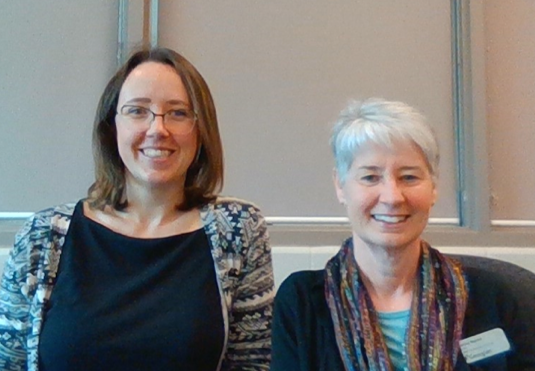
These partners in crime discovered a shared interest in collaboration and student-centred experience.
Artefacts
GC@3 is a daily mindfulness practice open to all. No registration required. Drop in from 3 to 3:10 p.m. each weekday for a connected, facilitated deep-breathing exercise.
The Changemaker in Residency Week event (beginning Nov. 16) and staff news piece. During the week, CTL is facilitating or co-facilitating the following sessions:
- What is Changemaking Teaching info drop-in on Monday, Nov. 16 from 10 to 11 a.m.
- The Community Service Learning with a Remote Twist Changemaking workshop on Tuesday, Nov. 17 from 10 a.m. to 1 p.m. (Register in Halogen or with Debora Moore)
- #ChangeTheNow Faculty Primer on Wednesday, Nov. 18 from 10 to 11 a.m.
- CSL Faculty and Community Partner Matchmaking Mixer on Friday, Nov. 20 from 1 to 3 p.m.
Visit the Changemaking and Social Innovation Microsoft Teams site and while you’re in there, check out the newly set up Changemaking and Social Innovation CoP Collaboration Hub.
Looking for info on how to use Microsoft Teams? Visit the Georgian CTL Microsoft Teams site.
Julia Barker
Community and Justice Services, Police Foundations, and Protection, Security and Investigation
Student connections and engagement
The learning environment has changed from previous semesters when we were able to come together as a group and work out in the gym. I teach fitness to the Community and Justice Services, Police Foundations, and Protection, Security and Investigation students. Normally, the course would involve in-person, physical training and testing to prepare students for Fitness Test for Ontario Correctional Officer (FITCO) applicants, but with remote teaching and learning, I had to rethink how to deliver this very experiential learning class. I also had to rethink how to maintain the sense of community and comradery that happens when the students are physically together. Each week, we have a live workout and I encourage students to chat with each other (and me) during rest periods. This helps with motivation and creating a sense of community. At the end of the workout, we all talk about their training plans and the pros and cons of various exercises and program styles.
Adapting and changing is something I have embraced. After completing my Master’s of Science at Western University, I moved to Bermuda for five years and worked as a microbiologist to research ocean carbon budgets, specifically how the phytoplankton community shifts relate to climate change. While there, my life changed dramatically when I started exercising and eating properly. I loved how I felt and how I performed better in all areas of life. My energy levels, mood and self-confidence were restored. I wanted to share my passion for health and fitness so when I moved backed to Ontario, I took it as an opportunity to start a second career. I graduated Georgian College’s Fitness and Health Promotion diploma, became a certified personal trainer and group fitness instructor, a Level 1 CrossFit Trainer, and opened my own studio, Horseshoe Valley Strength & Wellness.
Having experienced the Georgian classroom from both sides of the looking glass has really helped my teaching practice but I knew with remote teaching, I had to learn more. I took CTL’s new faculty orientation sessions, which was a great starting point. I also attended LOTTR and the Foundations Series which helped with ideas for blackboard organization and evaluations. As a group, we discussed strategies to foster student engagement, improve our syllabuses and have our evaluations match our teaching. As well, as part of my learning process, I like to read and ask experts in the field for advice. I read James Lang’s book, “Small Teachings: Everyday Lessons from the Science of Learning” and stayed connected with the incredible Georgian faculty team. They took me under their wings and served as mentors as I began my teaching career (and continue to do so).
I am still learning but if I was to offer advice to other teachers, I would say, remain open to new ideas to improve student learning and reach out to colleagues for support. We are all learning and growing and this remote teaching environment has been an opportunity to try something new, test out new course structures and evaluation methods. Some ideas work well in practice and others are total flops. Talk to your students, they are a wealth of knowledge and have some of the best ideas to improve their learning experience.
Thanks for being an awesome faculty, Julia!
We are all learning and growing and this remote teaching environment has been an opportunity to try something new, test out new course structures and evaluation methods. Some ideas work well in practice and others are total flops. Talk to your students, they are a wealth of knowledge and have some of the best ideas to improve their learning experience.
Artefacts
Interested in accessing an eBook from the Georgian Library?
Two ways to read eBooks:
- Read online (using computer and web browser) – just click the PDF full text icon.
- Read offline (downloading ebooks for a period of time to read later on your laptop, tablet or mobile device)
Finding eBooks
- Input keywords in our “Multisearch” search box; click Search
- On the left hand side, under “Source Types”–click “Show More”; Check the “eBooks” checkbox. This will limit the list to only eBooks.
You will need to login to access these titles. If you have not requested your Georgian library card and PIN, you can do so here: Request your Georgian College Library ID and/or reset your PIN.
Continue to access our workshops and training opportunities throughout our weekly drop-in sessions.
Laura Koza
Communications faculty, Human Services and Community Safety
Team member of the Centre for Changemaking and Social Innovation (CCSI)
Connection and changemaking at Georgian
Laura Koza is a part-time faculty member for the Communications department, and a member of the Centre for Changemaking and Social Innovation (CCSI) team.
Laura believes in inspiring students, staff and faculty, both inside the classroom as faculty and in her role with the CCSI to help them understand how they are changemakers. By showcasing and practising empathy, collaboration, leadership and creativity, Laura initiates important conversations that help students connect the dots between what they are passionate about and the learning that will support them on their journey. By bringing changemaking into the classroom, she finds that students are more engaged, excited and passionate about their education, learning and growth.
As a member and co-facilitator of the Changemaking and Social Innovation Community of Practice, Laura brings her knowledge of teaching with a changemaking lens to other community members. Understanding that changemaking shows up differently for different people is essential. She states, “We don’t all need to be the ‘Elan Musk’s’ of the world; it is about leaving the world a little bit better when you go to bed than when you woke up. Whether you can change one person’s day, have positive impact on a community or a social issue, you are a changemaker!”
Furthermore, “Changemaking is all about connection. If we can bring connection into the classroom (as a way to gather research, treat each other, connect to the subject matter, or take action on social issues etc.), not only are we improving our classroom environment, but we are teaching students the skills that employers are looking for.”
Laura’s practice is exemplified by a quote that hangs on her wall that reads, “We don’t need to agree on anything to be kind to one another” which reminds her to “live, teach, work with kindness!” This is why discussions about Humanizing Online Teaching and Learning such as the ones offered by CTL are so important.
Laura brings creativity to life in her personal life through her passion of sewing. “I strive to make as many of my own cloths as I can. I love the metaphor of all the parts coming together to make something whole”, says Laura.
According to Laura, “Changemaking for me also means challenging myself to learn to be comfortable in our new teaching and learning space and striving to demonstrate resilience for my students. For these reasons, I have seen the value in taking the extraordinary technology sessions provided by CTL including: Intro. to Blackboard, Screencast-O-Matic, and FlipGrid, as well as the Teaching at Georgian (T@G) faculty series.”
Thanks for being an awesome faculty, Laura!

Changemaking is all about connection. If we can bring connection into the classroom (as a way to gather research, treat each other, connect to the subject matter, or take action on social issues etc.), not only are we improving our classroom environment, but we are teaching students the skills that employers are looking for.
Artefacts
Thumball
Laura created the Thumball as a way to build connection and empathy. With the help of Adam Dagenais in CCSI, it is now virtualized and can act as a great humanizing tool to help build rapport and connect with your students and peers.
Changemaking intention cards
Laura created the intention cards as a way to bring learning from thought to action. The intention cards are meant to inspire change through creating intentionality in our daily actions.
Access changemaking resources in the open access Changemaking / Social Innovation Microsoft Teams site curated by CTL.
The Humanizing Series will run in winter 2021.
Teachg@Georgian (TAG) will be offered for the start of the winter 2021 semester.
Continue to access tech sessions through in our weekly drop-in sessions.
Tracey Carroll
Dental Hygiene program, School of Health, Wellness and Sciences
Humanizing teaching and learning
Teaching remotely was not my first choice. I like to connect with students in the classroom or lab. Dental Hygiene is predominately a hands-on profession and communication and interactions between faculty and students are integral for learning. One of the courses I teach is about dental materials so when we went remote, I wondered how I was going to do this from home. I love getting to know my students and engaging with them, but I felt being in isolation at home was a barrier. I am not on any social media and I don’t like videos or pictures of myself so putting myself out there was really outside my comfort zone. I felt vulnerable to judgment and criticism. I felt my privacy was being compromised.
Then I realized that all my students were feeling the exact same feelings. They, too, have gone through so much change, uncertainty and vulnerability.
My students came first and their stories really gave me strength and inspiration.
I spent some time with the CTL team who offered me support and encouragement. I enrolled in LOTTR and the Remote Learning Orientation series to figure out, in very short order, how to teach my students remotely. The CTL team were instrumental in my remote teaching journey, ensuring I delivered the same quality education, compassion and connection to my students.
Teaching dental materials means students have to learn about several different products and then how to mix them correctly. I had to think differently about how to organize my course and how I connected with my students. I decided I would offer weekly videos “grab a coffee with Tracey” and talk about the previous week and what was coming up. I also prepared demonstration videos in my kitchen. I have never done anything like that before but I felt students needed to know I was human. I had COVID hair. I said “ums” and “ahs” throughout but I treated the videos like a conversation. I tried to think I was talking to someone while we both were in isolation.
I also learned some tech-like things like using a tripod, my phone for videos and a ring light. I also incorporated PollEverywhere, H5P, Flipgrid, Screencast and Microsoft Forms and joined colleague forums to share experiences. The students were learning, but I was learning too. It took time, patience, understanding and most importantly, empathy.
Yes, the videos are not perfect or studio quality, but they are genuine.
I knew I was successful in reaching the students when I received emails from my students commenting on the videos. Some comments included: “The videos were helpful”, “ I felt supported”, “It decreased my stress knowing I could replay the demonstration videos”, “I felt comfort being invited on your back deck for a morning coffee to review the test” and “I, too, have COVID hair”.
If I could share advise to others, I would encourage them to join the journey of learning to teach remotely. The reward of receiving positive comments from students far outweighed my initial uncertainty of success. I felt accomplished in being able to connect with the students as I would in a traditional classroom setting. I encourage other faculty to go for it, to explore the endless possibility of online teaching techniques, dive into your inner creativity, express your passion for teaching your discipline in unique ways and don’t second guess yourself. Your students really do appreciate the reality of being human.
Thanks for being a great faculty, Tracey!
I encourage other faculty to go for it, to explore the endless possibility of online teaching techniques, dive into your inner creativity, express your passion for teaching your discipline in unique ways and don’t second guess yourself.
Artefacts
Humanizing in our Remote Learning Environments.
Humanized remote and online teaching involves faculty and student relationships, community, encouraging connections and empathy during the learning experience. The Centre for Teaching and Learning (CTL) is proud to present a NEW drop-in webinar series, inspired by Dr. Michelle Pacansky-Brock, leader in higher education, shedding light on the value of Humanizing in our Remote Learning Environments.
Tools for screencasting and video
Several decades of research has demonstrated the many benefits that video in education provides for students throughout the learning process. Videos and screencasts enable students to learn at their own pace, make meaningful and deeper connections with the content and in many cases, there has been evidence of increased engagement and motivation (Wilmot, Bramhall & Radley; 2012).
Sarah Weekes
Liberal Arts, Barrie Campus
Academic integrity and authentic assignments
Sarah has been teaching at Georgian since 2003 and in 2009 moved to the Liberal Arts portfolio. Even though Sarah was experienced teaching online, the pivot to remote learning required a shift in thinking about what it means to teach a course.
“As I started to think about the summer semester, I realized I wanted to overhaul my course. For me personally, at the end of the winter semester I noticed that my daughters were experiencing extreme screen fatigue as my husband and I were all trying to find a way to juggle devices and internet strength in order to successfully complete our work and studies. My five year old was completely frustrated because all she saw was one or all of us staring at a computer for hours. She started to wander the house loudly stating how lonely she was. I began getting up at 4 a.m. in order to get my important school work done so that I could be present during the day for her while supporting the older girls with their school and remote learning. I began to wonder how are my students experiencing this pandemic? Were they fighting with internet signals and strength? How did they organize uploading an assignment or being in a synchronous session? Were they parents who were juggling like me? Were they back at home or were they isolated on their own? I had so much empathy for them.
My course is Lifestyle Management but I now like to think that I teach “Lifestyle Management in the time of COVID”. I sat in on a ton of CTL courses for inspiration: WebEx, screencast-o-matic, kahoot, quizlet, flipgrid, library information and more. I was really intentional in trying to help students reduce stress with this class. Not only teaching skills to reduce stress but actively trying to create a course that reduced stress. So, the first thing I did was to do away with due dates. I now have “suggested” due dates but no hard due dates for anything. For 80 per cent of my students, it is wonderful. I received so many thank you emails at the end of the last semester. They really enjoyed the ability to schedule the course for themselves. There is so much going on right now for everyone – this was a little thing but it became a huge thing for them. For the other 20 per cent, well, the last week of the semester was a busy marking week for me but I got through it.
The other really exciting thing that I did, with the help of CTL, was I changed my major assignment. Normally I would have my students write a reflection assignment based on discussion board posts. I felt that everyone was tired of looking at their screens and I wanted to inspire some creativity. I created a really broad rubric that would cover any submission and thought I would have tons of questions because I didn’t give much in the way of instructions. Instead, what I ended up with was an assignment where my students became teachers, took an aspect of the course and taught it to someone who had not yet taken the class – in any format they wanted. The result? Some amazing YouTube videos, TikToks, recipe books, screencasts, brochures, websites and PowerPoints created all by students. The energy around the assignment was infectious. I had such a sense of pride and happiness and the most amazing part was I marked 150 assignments and did not have a single instance of academic misconduct. It was such a joy to mark assignments that students enjoyed creating.
I encourage anyone thinking about making a change in their course to just do it. I had thought about it for a couple of years but was fearful of the perceived added work to make the change. The energy created with the students was worth it every time!”
Thanks for being a great faculty, Sarah!

I encourage anyone thinking about making a change in their course to just do it. I had thought about it for a couple of years but was fearful of the perceived added work to make the change. The energy created with the students was worth it every time!
Artefacts
While assessment design cannot prevent cheating, it is a vital tool for fostering integrity. Assessment drives learning, so where assessment is poorly conceived, students will be more likely to rationalize or resort to cheating. Here are some resources to consider around academic integrity.
At Georgian we refer to self-care as taking action to improve one’s own physical, emotional, mental and/or spiritual well-being. Wisdom from our Indigenous community members teach us that it’s important to pay attention to all areas of our well-being. There are lots of resources for students Remote learning and supports for students.
Pamela Bowes
Human Services portfolio, Social Services Worker program
Technology embracer!
Pamela was surprised to be asked to be included in the faculty spotlight and a little hesitant – there are so many wonderful and skilled faculty, I’m just one of so many, was her reaction to the invitation.
Pamela came to Georgian College in January 2019 after a 30+ year career as a front-line social worker and case manager in Toronto. Now living in the country and teaching part-time at the college has been a wonderful semi-retirement step in her life.
Pamela loves every aspect of teaching students – from prepping lessons, teaching, working with other faculty and especially connecting with the students.
But transitioning to remote learning was a huge learning curve – considering she just learned how to get Netflix. But it was the need to ensure students continued to have the best learning experience that kept her trying. In fact, Pamela lined up family and friends to record mock counselling sessions to demonstrate skills to students to make things even more engaging in remote lessons: “Students liked the videos, but they especially loved when I would demonstrate poor skills, just to keep the sessions lively and a bit fun.”
“I think I’ve taken training sessions with every CTL staff person over the last six months” says Pamela, and she’s probably right! We’ve all had the opportunity to connect with her. In the early days, and especially during summer semester when extra effort was needed to fully engage students, Pamela kept trying and learning more. “I would say I’m not a huge fan of technology since my career helping people was always face-to-face and I loved getting to know people” but working with technology allowed Pamela to stay connected with her students and try to demonstrate her eagerness for something new.
Pamela says her colleagues in the Social Service Worker program have been great allies with suggestions and support, and “I could not have done all this learning – and feeling confident about the challenges – without the wonderful help of all the CTL staff.”
Personally, Pam loves to swim in Lake Simcoe, loves to cycle outside on the country roads near her house. She says that “nothing makes me happier on a ride than to see a field full of cows or horses (hence that picture I sent to you – I’m always taking “selfies” of me with cows/horses), and I like to binge watch British crime dramas on TV.”
Thanks for being an awesome faculty, Pam!
We had no choice but to embrace technology! Trying new ways to teach and new tech, with the support of great Georgian colleagues, has made the best of this tough situation.
Artefacts

Pamela has taken many training sessions and completed the early edition of LOTTR. She is now taking the LOTTR Next Steps. For teaching her classes, she is using live WebEx sessions, Microsoft Teams for break-out discussions, PollEverywhere, Flipgrid, recording Screencasts and has greatly expanded her Blackboard shell.
LOTTR is a four-week series completely online. LOTTR Next Steps is an 11-week series with synchronous and asynchronous content that complements LOTTR.
Register here through Halogen. If you have any questions, please email CTL@georgiancollege.ca.
Drop-in sessions for tech run regularly each week. Visit the CTL website for info on sessions for WebEx, Microsoft Teams, PollEverywhere, Flipgrid and Screencast-O-Matic:
Need help deciding what tech to choose? Visit our Learning Technologies webpage for more information.
Mary Spencer
Engineering and Environmental Technologies
Teaching is about using educational technologies effectively
Mary Spencer has been a full time faculty with the Civil Engineering Technician/Technology programs since 2014, yet with all her experience, she still found the shift to remote teaching a challenge.
“[Teaching remotely] is well outside of my comfort zone (I’ve never even taken a course online!). I want to feel that I am delivering quality learning, not content, to my students.”
Therefore, Mary decided to look for teaching and learning resources to help her. Among the many sessions she attended, Mary found LOTTR helped her to see what an online course looks like and how to organize it so it did not appear overwhelming.
Here are some things Mary has designed and developed to help students with the transition as well:
“I made a 1 page infographic syllabus for my courses and put two key items in them; I added a ‘suggested weekly structure’ and ‘important course dates’. The graphics and colours are easy to read, it will help students to stay organized and give them an idea of how to approach the course.”
“One of my classes is project management which requires team projects (duh!). As we know, team projects can be a challenge, but they can also be rewarding. I made a video to ease their anxiety about this. This helps to humanize the learning. For this video I had access to a green screen and good recording equipment; however, I did all the editing in Screen-Cast-o-Matic.” (see Artefact for example)
“Another thing I received good feedback on from students is H5P videos with questions integrated into them. I make the videos in Screen-Cast-O-Matic, upload them to YouTube and then use eCampusOntario H5P to integrate the questions. This is more upfront work, but again, my goal is that they are learning, not just having content thrown at them. The questions help them to focus on what is relevant.”
“My advice for others teaching remotely this fall; there are a million different technology tools you can use to enhance your teaching. However, the tool itself isn’t teaching. Think about what your end goal is – what do you want students to be able to do at the end of the lesson? The week? The course? Then start taking the small steps to get them there.
I also made my own rule that I limit any technology that cannot be embedded into Blackboard. I don’t want students to spend a ton of their learning time on how to use software.”
Thanks, Mary, for being an awesome Georgian faculty!
There are a million different technology tools you can use to enhance your teaching. However, the tool itself isn’t teaching.
Artefacts
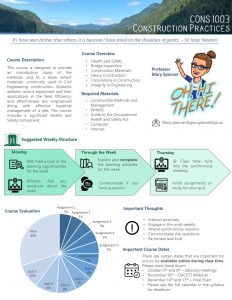
Watch this video on H5P Studio
If you’re looking for support in developing your remote teaching, please check out our offerings
Humanizing Remote Teaching and Learning
In a humanized course, faculty intentionally cultivate an inclusive learning environment that fosters psychological safety and trust and forms connections that grow into relationships and a community. (Michelle Pacansky-Brock)
As we prepare to jump into the fall term together, CTL is offering a series of drop-in webinars (no registration required) promoting, encouraging, discussing, and engaging with the idea of humanizing learning.
Technology can be a powerful tool for transforming learning. It can help affirm and advance relationships between educators and students, reinvent our approaches to learning and collaboration, shrink long-standing equity and accessibility gaps, and adapt learning experiences to meet the needs of all learners. There are numerous learning technologies available for Georgian College faculty to use in the classroom to enrich the learning experience. With so many tools emerging on a daily basis it may feel overwhelming to try a choose the right tool for the task at hand.
Check out the Learning Technologies section of the CTL website to learn more about the technologies we support.
LOTTR is a 4 week series completely online. Halogen registration link:
Please use this link to register. https://global.hgncloud.com/georgiancollege/link?id=108460. If you need assistance with registration, please email CTL@georgiancollege.ca.
Screencast-o-matic and H5P workshops
A screencast is a digital recording of computer screen output, also known as a video screen capture, often containing audio narration. Screencast-O-Matic is a free screen recorder for instant screen capture and sharing. Use it right in your browser without an install at Screencast-O-Matic.com or download to run on your computer at anytime.
H5P empowers everyone to create rich and interactive web experiences more efficiently – all you need is a web browser. H5P content is responsive and mobile friendly, which means that users will experience the same rich, interactive content on computers, smartphones and tablets alike.
If you would like to learn more about screencasting and H5P please check our weekly workshop schedule found on our homepage. We are currently offering 1 hour drop-in question periods for Screencast-o-matic and Flipgrid on Wednesdays, noon-1p.m. Other workshops and our H5P Community of Practice offerings vary from week to week.
Norm Burton
Electrical programs, Midland Campus
I never dreamed I would be teaching through a pandemic
Norm Burton teaches in the electrical pre-apprentice and apprentice programs in Midland which are traditionally hands on/ experiential in nature. Some people may think it is impossible to teach an apprenticeship program remotely, but Norm found a way.
Norm reached out to CTL to figure out how to keep teaching through the pandemic. “Hands on experiential learning is traditionally how I have taught the Electrical Apprenticeship program in Midland. With the pivot to remote learning, I needed to rethink how to maintain our high standards of teaching and learning while giving students the necessary experiences to be successful.”
Norm decided to take the Learning Online to Teach Remotely (LOTTR) course offered through the Centre for Teaching and Learning. He quickly realized students want to know the instructor is a real person that they can connect with, even in the online world. LOTTR introduced Norm to videos as a way of connecting the learning while creating a sense of community. Norm purchased a low cost camcorder and set up his workshop to shoot short videos to integrate with content. A quality webcam can also be used to create great demonstration videos.
“I have been experimenting with a variety of delivery mediums such as: video, screen casting, presentations, short quizzes that include lots of graphics (H5P interactions), and WebEx interactions so I can encourage learner engagement. All of these topics are covered in the LOTTR course. I also appreciated seeing different examples of how experienced instructors set up their course shells too.”
Norm created workbooks that cover a certain topic with a section at the back that students can complete. The first part is a digital format that includes a quiz that can be tracked by Blackboard. He is also exploring H5P to spice things up too.
“I think anyone can adapt to the remote learning environment. Teaching, to me, is about finding the best way to share my knowledge and skills so students can be the best electrician they can be, love what they are doing and have a long career in the profession. Electricians have to be critical thinkers and adapt to different situations and I believe I am demonstrating that for our students.”
Thanks, Norm, for being an awesome Georgian faculty!
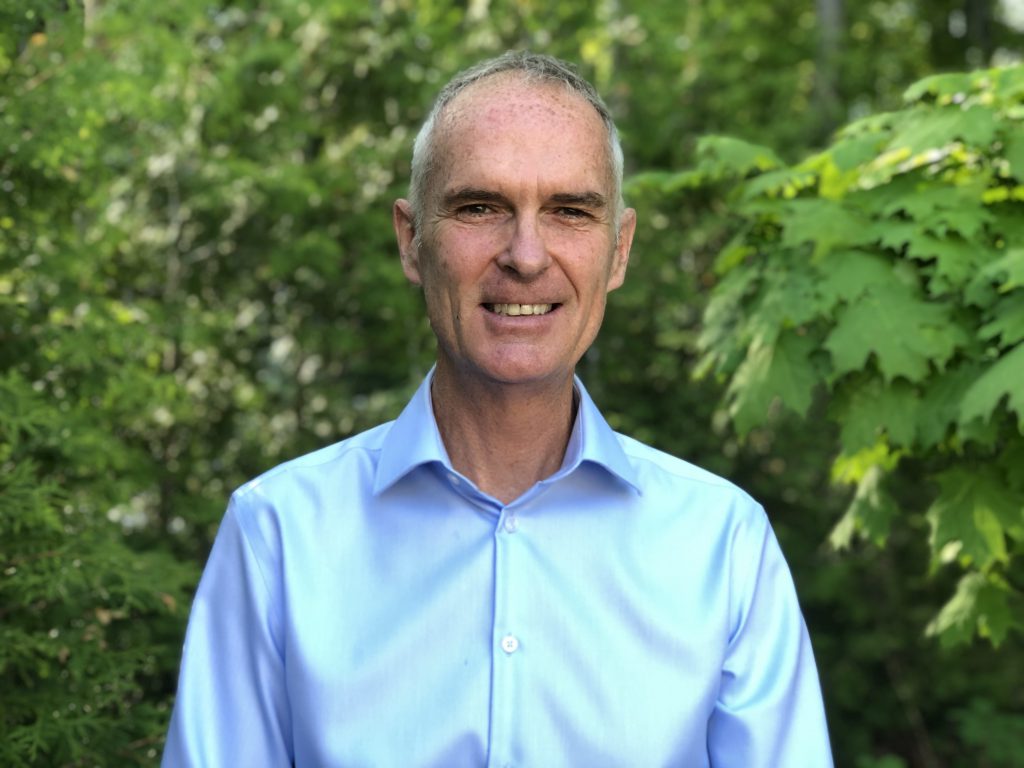
I think anyone can adapt to the remote learning environment. Teaching to me is about finding the best way to share my knowledge and skills so students can be the best electrician they can be, love what they are doing and have a long career in the profession.
Artefacts
If you’re looking for support when developing your remote teaching, please check out our offerings listed below.
LOTTR
This 4-week series is completely online. The overall goal of this series is to guide you through the process of designing and developing a remote course, and to support you in developing confidence as facilitators of remote learning at a beginner level.
This series has four modules with readings and activities to work through asynchronously each week. You will have one week to complete each module at whatever time works for you. We will also be offering optional drop in sessions for discussion and Q&A on Tuesdays from 2:30 to 3:30 p.m. and Fridays from 10:30 to 11:30 a.m.
- Module 1: An Overview of Remote Teaching and Your Role
- Module 2: Building Your Course
- Module 3: Preparing for Semester Start
- Module 4: What to do During the Semester
You will have weekly assignments, tasks, and readings in a Blackboard shell where you are assigned a student role. You will also be directed to build components within your course shell that you are teaching in the upcoming remote semester. Any questions on course content, please contact Amy Goruk.
Halogen registration link:
https://global.hgncloud.com/georgiancollege/link?id=108460
If you need assistance with registration, please contact Debora Moore.
LOTTR Next Steps
LOTTR Next Steps is a combination of synchronous and asynchronous content that we hope will provide you with some additional information, model application, and allow for time to practice, collaborate, chat, and ask questions.
The Fall cohort of LOTTR Next Steps begins Thursday, Sept. 24 (week two) and runs weekly (with a break/no session over reading week) until Dec. 10 (week 12). Each week, there will a 1.5 hour synchronous meeting (Thursdays from 1 to 2:30 p.m.) where concepts, tools, and strategies will be introduced/discussed, and complementary material and resources will be posted online, as well as resources or answers to any questions or discussions that arise in our sessions. The synchronous sessions will include 60 minutes of concept/material introduction and discussion and 30 minutes to apply and try out the topics discussed with support from CTL staff and peers.
Please register through the Halogen system. https://global.hgncloud.com/georgiancollege/link?id=109220
For more information about LOTTR Next Steps please visit our website. If you have any questions, or would like more information, please feel free to contact Amy Goruk or Kim Reid. We hope to hear from you and would love to see you on Sept. 24!
Screencast-o-matic and H5P workshops
A screencast is a digital recording of computer screen output, also known as a video screen capture, often containing audio narration. Screencast-O-Matic is a free screen recorder for instant screen capture and sharing. Use it right in your browser without an install at Screencast-O-Matic.com or download to run on your computer at anytime.
H5P empowers everyone to create rich and interactive web experiences more efficiently – all you need is a web browser. H5P content is responsive and mobile friendly, which means that users will experience the same rich, interactive content on computers, smartphones and tablets alike.
If you would like to learn more about screencasting and H5P please check our weekly workshop schedule found on our homepage. We are currently offering 1 hour drop-in question periods for Screencast-o-matic and Flipgrid on Wednesdays, noon-1p.m. Other workshops and our H5P Community of Practice offerings vary from week to week.
Melanie Doyle, RDH, BA, M.Ed.
Dental Hygiene program, School of Health, Wellness and Sciences
Supporting others at Georgian
Melanie Doyle has been faculty in the Dental Hygiene program since 2001 – she is a graduate of the program as well.
She began teaching online in 2014 after taking Learning Online to Teach Online (LOTTO) and the Online Course Development Program (OCDP), and has taught two courses in a hybrid delivery since 2014; one hour face-to-face and two hours online. She co-facilitates mental health sessions and is part of the Mental Health Strategic Plan working committee.
One of Melanie’s superpowers is supporting others!
Of our recent pivot to remote teaching, Melanie states, “I felt lucky that I already had done some online training with LOTTO and OCDP. I had a great foundation where I could pivot to. Knowing this I reached out to faculty in our program to them know I was available if they needed to ‘bounce ideas off me.’”
As she taught during the summer, she has lots of great reflections based on her experiences being fully remote. Things she says that helped:
- carving out her own workspace
- dressing for work
- having clear start and stop times
- setting boundaries
- walking and fitness
- diving into CTL sessions (thanks, Melanie!)
Melanie has participated in a ton of our CTL sessions. She is currently using WebEx, Screencast-O-Matic, PollEverywhere, Kahoot, and Quizlet.
She has humanized her courses by checking in with students by poll each week. This allows her to see how students are doing and adjust her teaching. And, “it also allows them to feel you care and are approachable.”
She also provides students with links to mental health and wellness resources to help them adjust and cope with life as a current student.
And, in typical fashion, Melanie is happy to share her resources. Check out the handy word document and screencast about how she sets this up in her Blackboard shell each semester.
Melanie’s advice, “Take CTL courses, ask questions and learn from other faculty that have already done it…don’t try to reinvent the wheel.”
Thanks, Melanie, for being an awesome Georgian faculty!
About attending CTL sessions, Melanie says, “I attended … and felt an immediate sense of community. It was great to meet other faculty that were also hoping to connect and engage their students. We learned from CTL but also each other, there are always great nuggets of information that other faculty are already doing so I find these sessions are always very worthwhile.”
Artefacts
Eric Keeble
Business and Management
Never stop learning
Eric Keeble is an example of the resiliency, innovation and hard work our faculty demonstrated during the pivot-to-remote-learning of March 2020.
Eric started teaching at Georgian in January 2020. After being in the corporate world for 20+ years, he thought teaching a business math class would be fun. Like most new faculty, Eric signed up for orientation but ended up missing it because of a snowstorm. He wanted to help students be excited about math just as he is, and thought if I make it fun and “real-world” then students would love it too. Eric would check in with CTL or his mentor or other faculty looking for ideas to improve the classroom experience. Then, nine weeks into his teaching, like everyone, he had to move everything to remote delivery.
Eric’s response, “None of us are strangers to the need to adapt to disruptive events. Prior to Georgian, I spent over two decades in the corporate world, with accountabilities spanning P&L Management, Supply Chain & Logistics, and Sales & Marketing. Throughout my career, I learned that planning is critical, but adjusting and adapting to change is even more critical. I managed businesses through hurricanes, major labour disruptions, and unfortunately, more than one plant explosion. My past experiences have helped prepare me for the challenges of 2020.”
Eric wanted to share his knowledge and experience with students. To help them through this.
His advice to students: “First, you could easily become overwhelmed by what’s going on, and then to naturally detach yourself from whatever is considered ‘normal’. Instead, try to do the opposite – stick to what’s normal and routine and comfortable – like practicing quadratic function questions. Second, don’t consider the shift to remote learning as an excuse to take a vacation from learning. Last, resist the urge to watch movies like Contagion or Outbreak, as they aren’t really helping anything.”
Eric took advantage of any learning opportunities he could. He participated in Orientation for Remote Learning, LOTTR and a variety of specific sessions. He continued with weekly synchronous WebEx classes but was challenged with determining which of the many educational technology tools to learn and put to use. He wanted to keep students engaged. Using Poll Everywhere, he added questions for students and pre-recorded lectures using Screencast-O-Matic. In addition to capturing images of hand-written solutions, he also explored some of the more advanced testing functionality within Blackboard.
He writes, “The entire CTL team has been tremendously supportive during this retooling period, and I appreciate all the guidance provided by my course lead, Bob Saarimaki.”
Thanks, Eric, for being an awesome Georgian faculty!
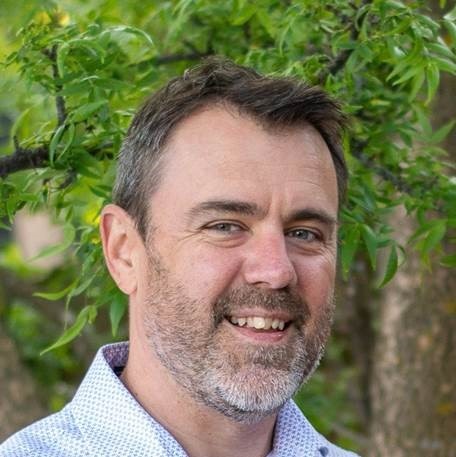
For the fall term, I hope to build upon what I’ve learned so far, to make the remote learning experience even more fulfilling for Georgian students. I hope to add more tools to my toolbox, such as H5P Studio or Explain Everything.